Fursona guide
How to make a fursona, step by step
By My Furry Art · Published 25 November 2026
In short
- A fursona is a character that represents you in the furry fandom. There are no rules about what it can be.
- Work through six choices: species, personality, body, colours, markings and name.
- You don't need to draw. A written description is enough for an artist to work from.
- Write it down with the checklist below, then get it drawn: on a free base, with a maker tool, or as a reference sheet.
A fursona is a character that stands for you in the furry fandom: part you, part whoever you'd like to be. Some people know theirs straight away. Most build it a piece at a time, and plenty change it later. There's no test to pass and no wrong answer.
You also don't need to be able to draw. What you need is a clear idea, written down. We turn written descriptions into finished characters all the time, so this guide is the same set of questions we'd ask you.
Step 1: Pick a species
Start with the animal, because it decides the body shape, the ears, the tail and half the personality people will read into your character.
- Pick what you feel close to. A favourite animal, the one people say you remind them of, or the one you've always doodled.
- The classics are classics for a reason. Wolves, foxes, cats, dogs and dragons are everywhere in the fandom, and that's fine. The details are what make yours yours.
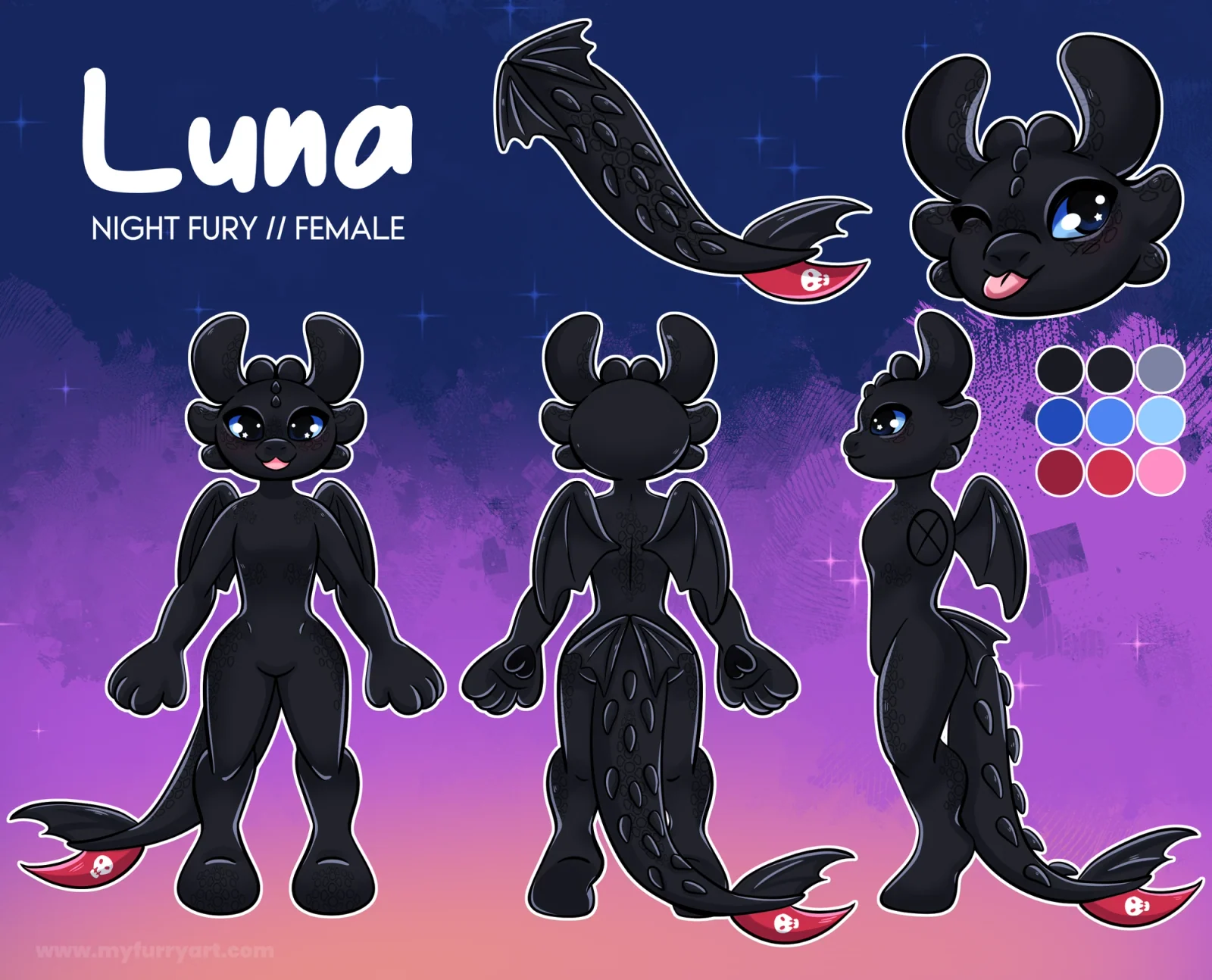
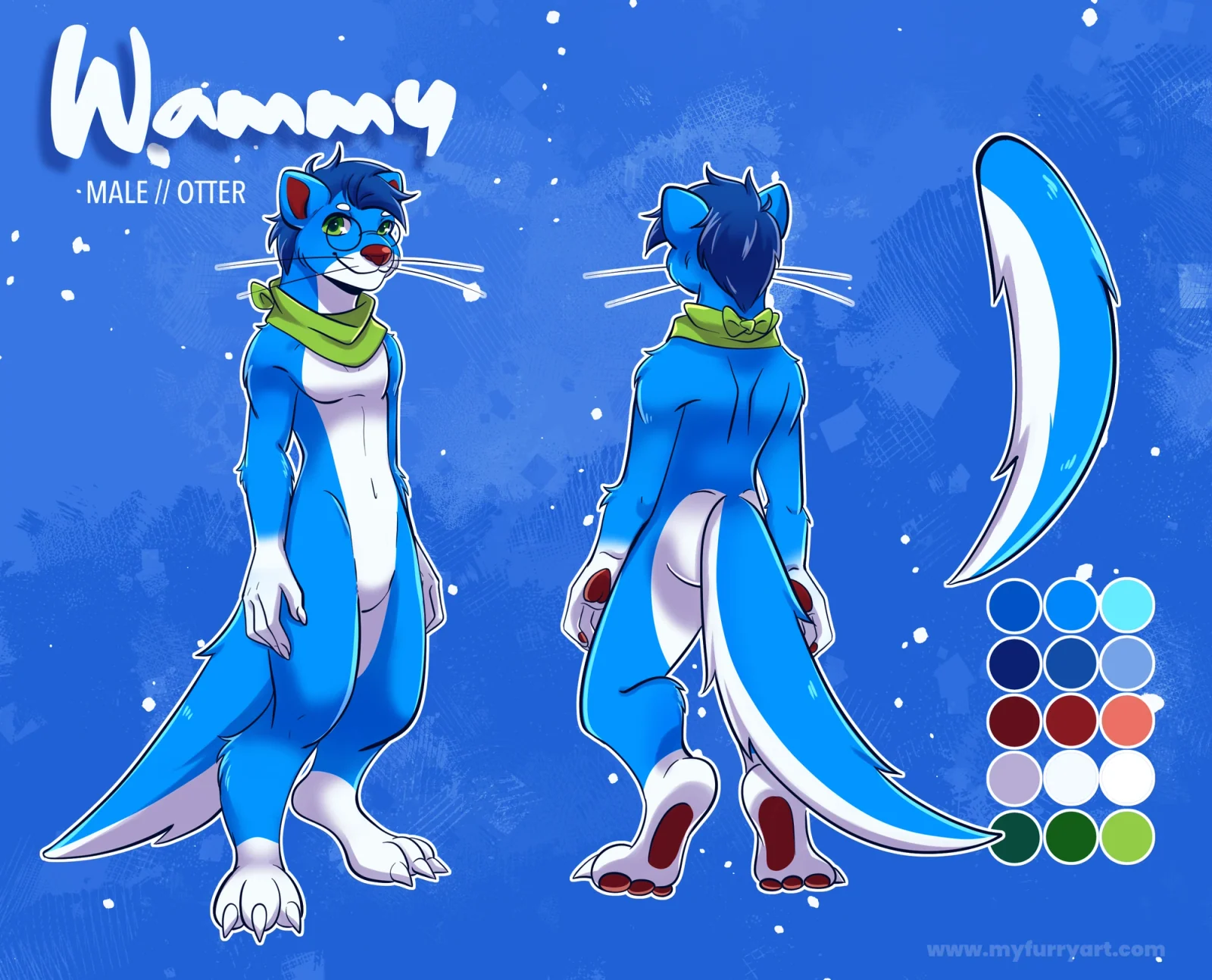
- Less common species stand out. We've drawn otters, ravens, bats, deer, snow leopards, a lovebird and a wall lizard for clients lately.
- Hybrids are welcome. Fox and snow leopard, deer and fox: decide which part comes from which animal.
- Some species were invented by someone. Protogens and Dutch Angel Dragons are two well-known ones, and they come with their creators' guidelines. Read those before you make one.
If you want to see how different species look in practice, we keep real pieces sorted by species.
Step 2: Give them a personality
A fursona isn't only a look. Two or three words about who they are will shape the pose, the expression and the colours.
Ask yourself: are they shy or loud? Sleepy or chaotic? A flirt, a nerd, a gym rat, a bookworm? Are they you on a normal day, or you at your most confident? Many people's sonas are a slightly braver version of themselves.
Step 3: Choose the body
- Anthro or feral? Anthro characters stand on two legs and have hands. Feral ones keep the animal's body.
- Build: slim, athletic, chubby, tall, short.
- Hair, if they have any, and how it's worn.
- The parts that vary by species: ear shape, muzzle length, tail size, horns, wings.
Step 4: Choose the colours
Colour is where most new sonas go wrong, and it's easy to get right.
- Keep it to three to five colours. One main colour, one or two secondary colours, and an accent for the eyes, paw pads or hair.
- Natural or not, both work. A grey wolf is as valid as a blue one.
- Put the accent where you want people to look, usually the eyes.
- Think about where it will be used. If you ever want a fursuit, clean blocks of colour are far easier to build than gradients.
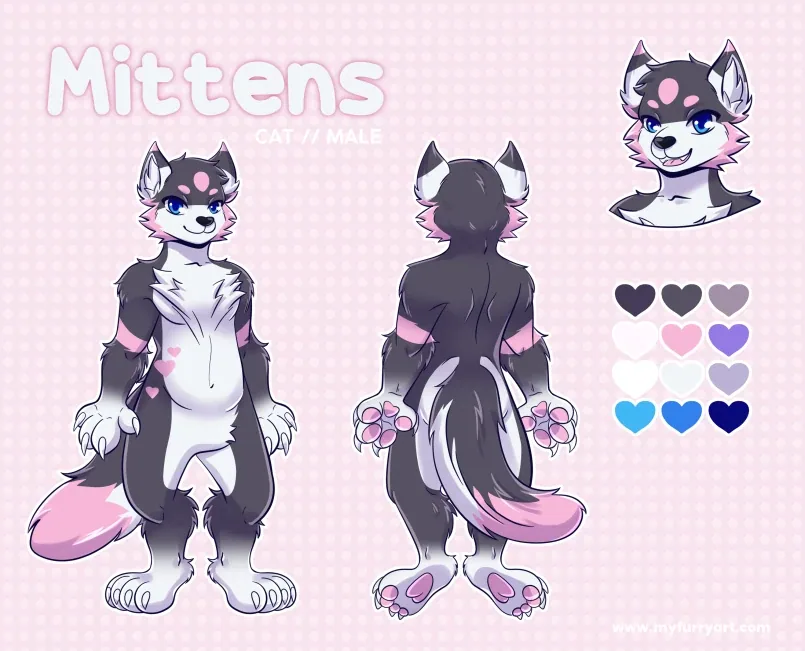
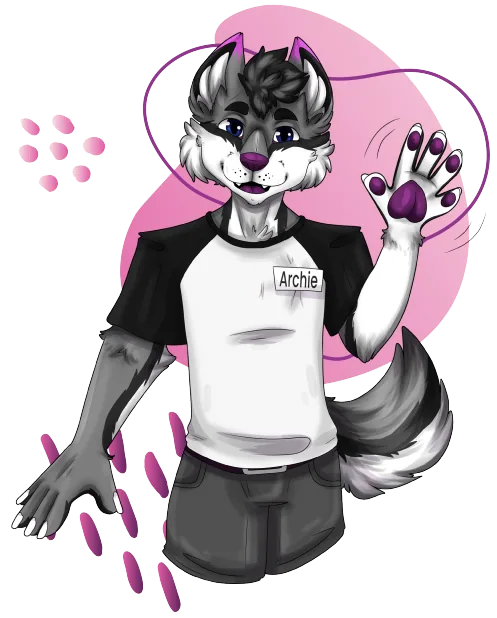
Mittens is grey, white and pink. The palette on a sheet shows more swatches than that, because it includes the lighter and darker tones of each colour.
Step 5: Add the markings that make them yours
With thousands of wolves and foxes out there, the markings do the work: socks, a tail tip, stripes, spots, a mask, a patch over one eye, a scar, heart-shaped paw pads. Pick two or three and decide exactly where they go, front and back.
Then add what they wear or carry, if anything: a scarf, a collar, glasses, a favourite hoodie.
Step 6: Name them
Some people use their own nickname. Some pick a word they like the sound of. Some name the character first and build everything else around it. Say it out loud a few times: you'll be hearing it a lot.
Write it all down
These are the things we ask about when someone orders from us. If you can fill them in, any artist can draw your sona.
- Name
- Species and sex (and the mix, for a hybrid)
- Body type: build and height
- Colours, and where each one goes
- Eyes: colour and shape
- Special marks: markings, scars, piercings
- Hair, clothes and accessories
- Personality and vibe
- Any pictures that help: photos of the animal, a colour palette, a rough doodle. Rough is fine.
Don't worry if some of it is still fuzzy. A good artist will show you a sketch first, and that's when most people work out what they actually want.
Four ways to get your fursona drawn
1. Draw it yourself
If you draw, even a little, start there. A rough sketch with the colours marked is a great reference for an artist later.
2. Colour in a free base
A base is a ready-made outline of a furry character that you colour in. It's free and quick. The limits: your sona will share its body and pose with everyone else who used that base, and bases only exist for the most common species. Check the base maker's rules about credit before you post it.
3. Use a fursona maker
Maker tools let you pick parts and colours from menus. They're fun for trying ideas, and they need no drawing at all. You can only choose what's on the menu, though, so unusual markings, hybrids and rarer species usually aren't possible.
4. Commission a reference sheet
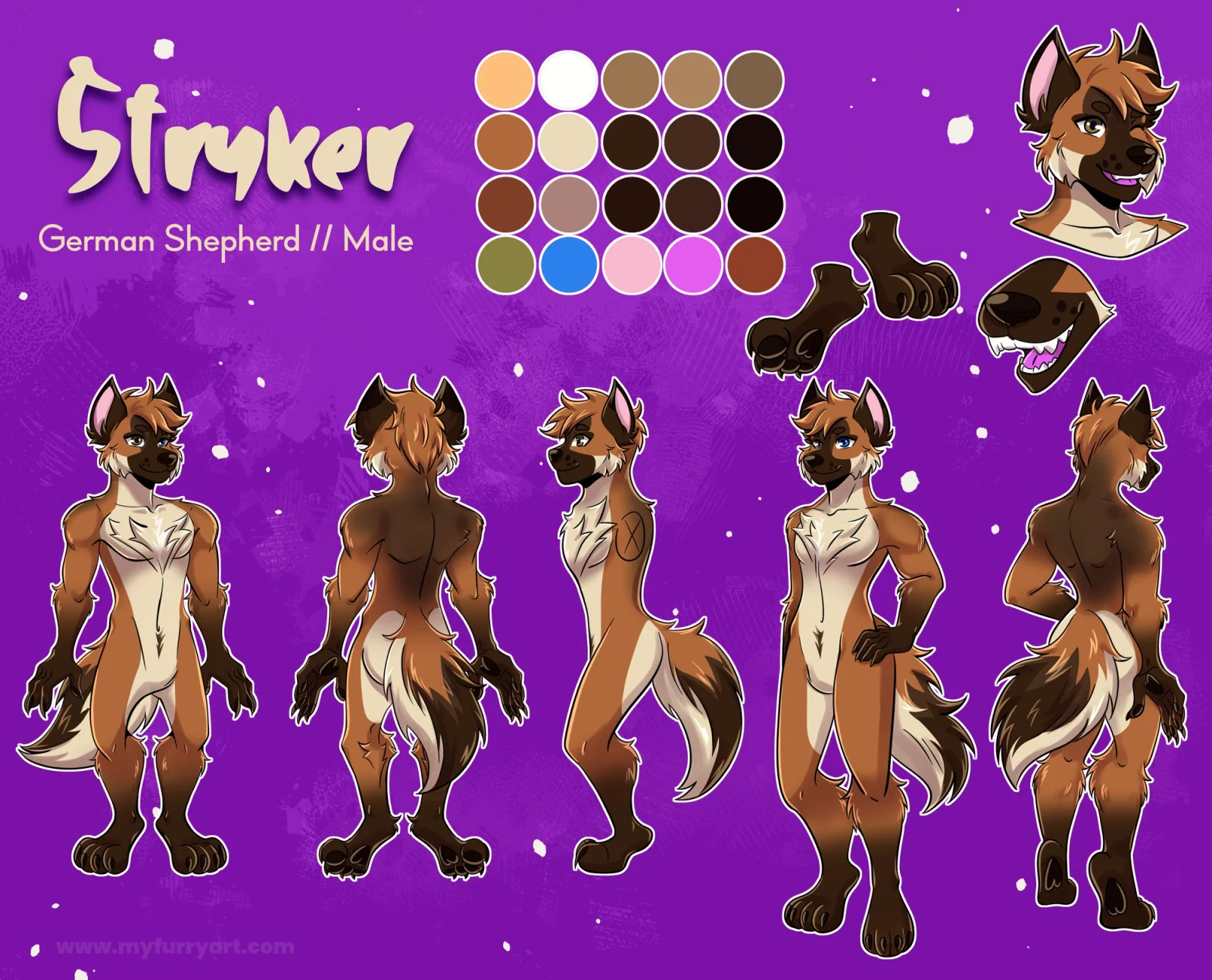
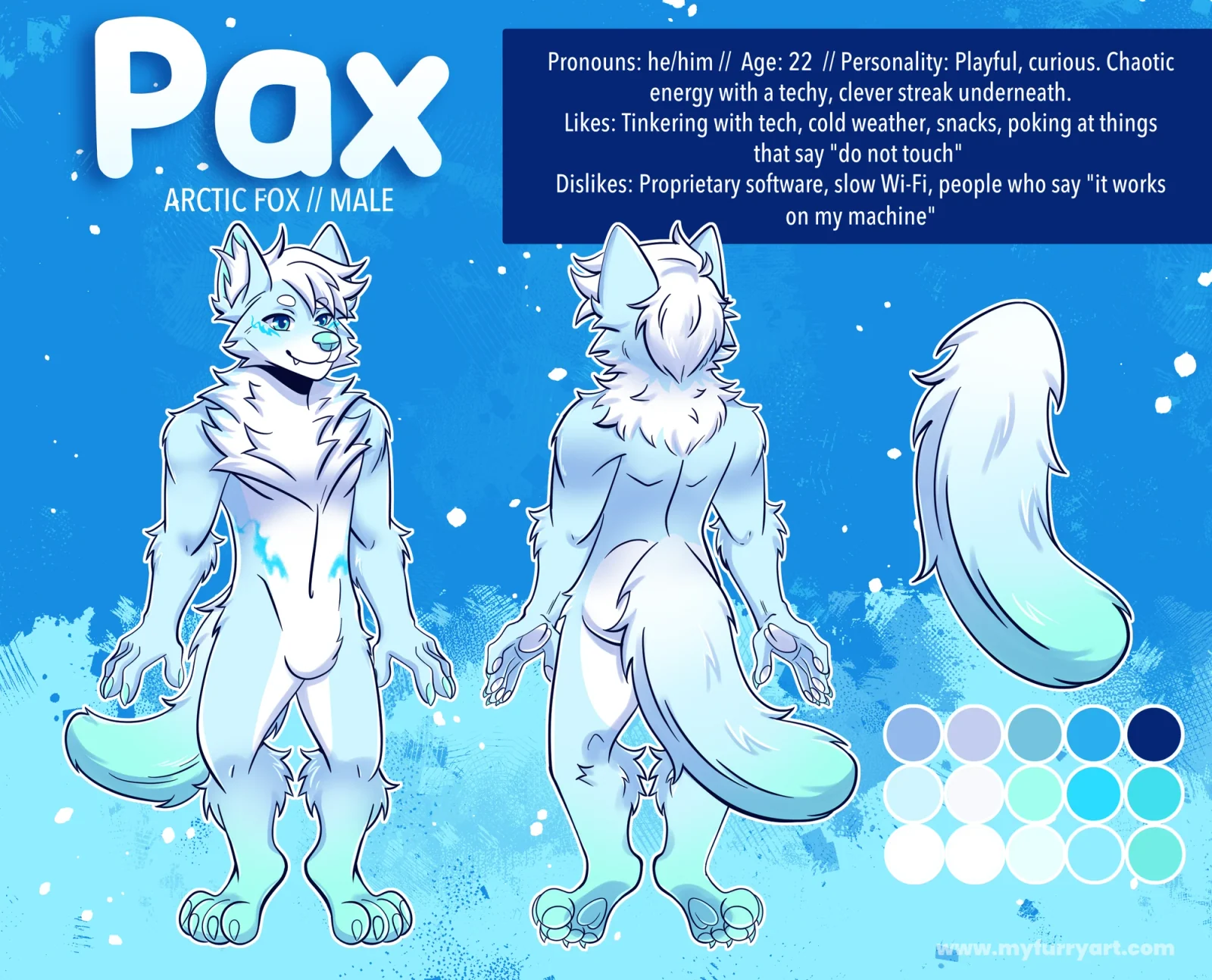
A reference sheet shows your character from the front and the back with their exact colours, so that every artist after that draws them the same way. It's the usual first commission for a new fursona. We wrote a separate guide to what goes on a ref sheet.
You don't need a finished design to order one. A description is enough: we sketch it, you tell us what to change, and it repeats until your sona looks exactly right. Our reference sheets start at $135, drawn by hand, with unlimited revisions and a full money-back guarantee.
Questions people ask
Do I need to be able to draw to have a fursona?
No. Plenty of furries have never drawn their own character. A written description, a coloured base or a commissioned piece all count.
Can I have more than one fursona?
Yes. Lots of people have a main sona and a few other characters, and many change or redesign their sona over the years.
Does my fursona have to be a real animal?
No. Dragons, hybrids and made-up species are all common. If you choose a species that someone created, read their guidelines first.
How much does it cost to get a fursona made?
Nothing, if you draw it or use a free base or maker. A commissioned reference sheet depends on the artist and on how much is on it: ours start at $135 for two poses.