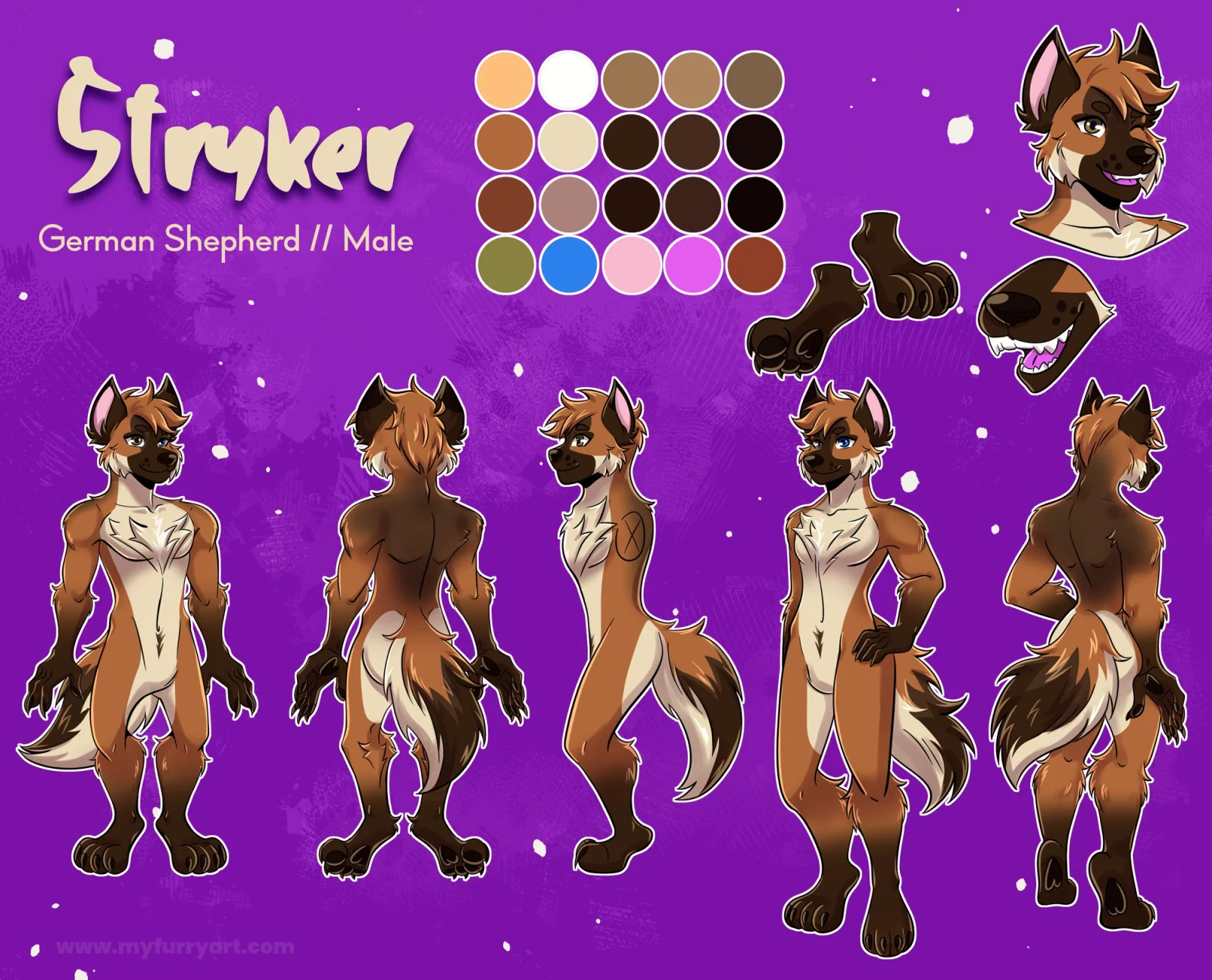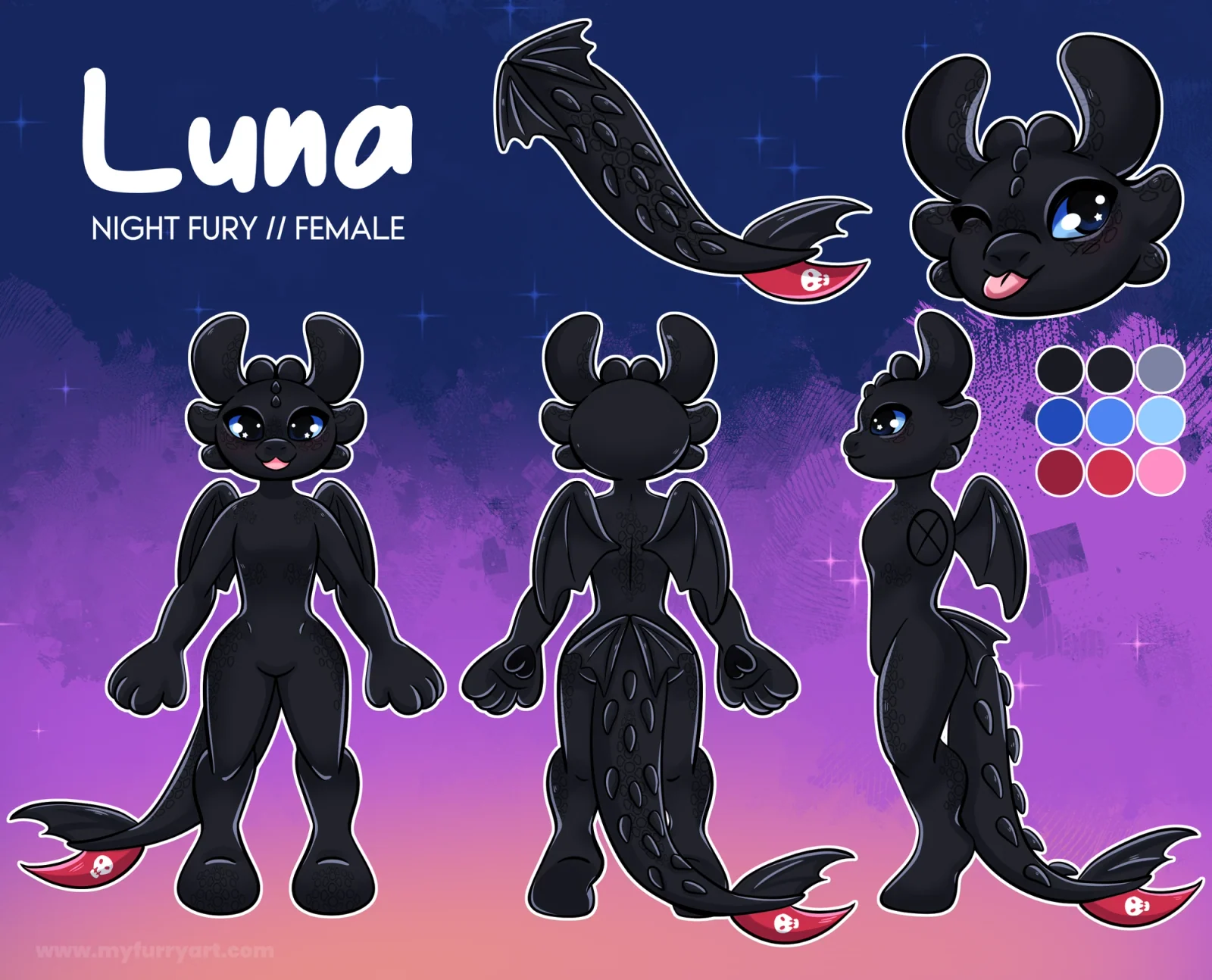
Ref sheet guide
What is a fursona ref sheet, and what goes on one?
By My Furry Art · Published 24 November 2026 · Updated 25 November 2026
In short
- A reference sheet (ref sheet) is one picture that shows your character from several sides, with their exact colours.
- The essentials are a front view, a back view and a colour palette. Extras like a headshot or paw pads show the details.
- A fursuit maker needs more than an artist does: three views and close-ups of the head, paws and tail.
- You can draw your own on a free base, use a maker tool, or commission one. Only the last gives you a unique design.
A fursona reference sheet, or ref sheet, is a single picture that shows your character from several sides, together with their exact colours and markings. It's the picture you hand to an artist, a fursuit maker or a friend so they can draw or build your sona correctly, without you having to describe them all over again.
If you're going to commission art more than once, it's the first thing worth getting. Here's what goes on one, and how to get yours.
What a ref sheet looks like
Here's a reference sheet we made for a client's cat sona:
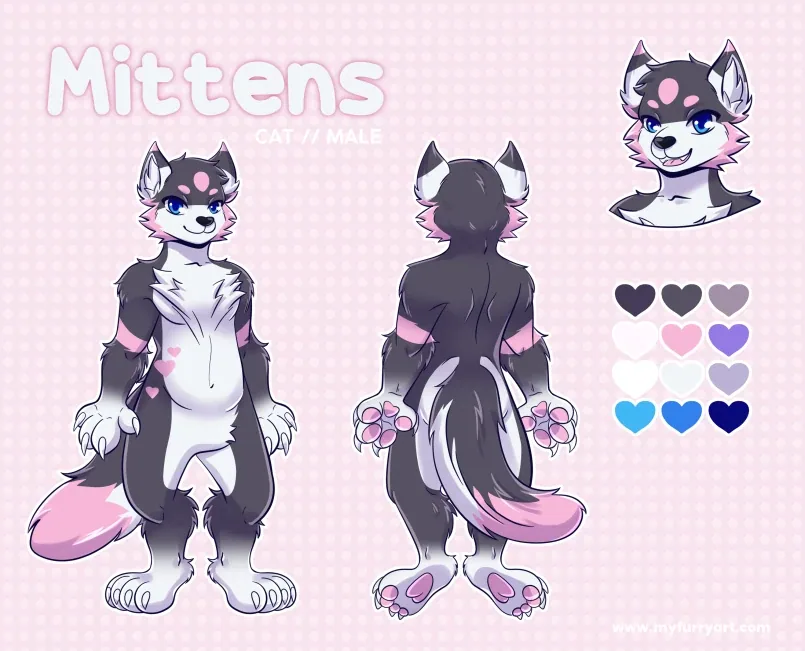
You can see the main parts straight away: the same character from the front and from the back, a palette of their colours, a close-up of the face, and the name. For more, see our 28 ref sheet examples.
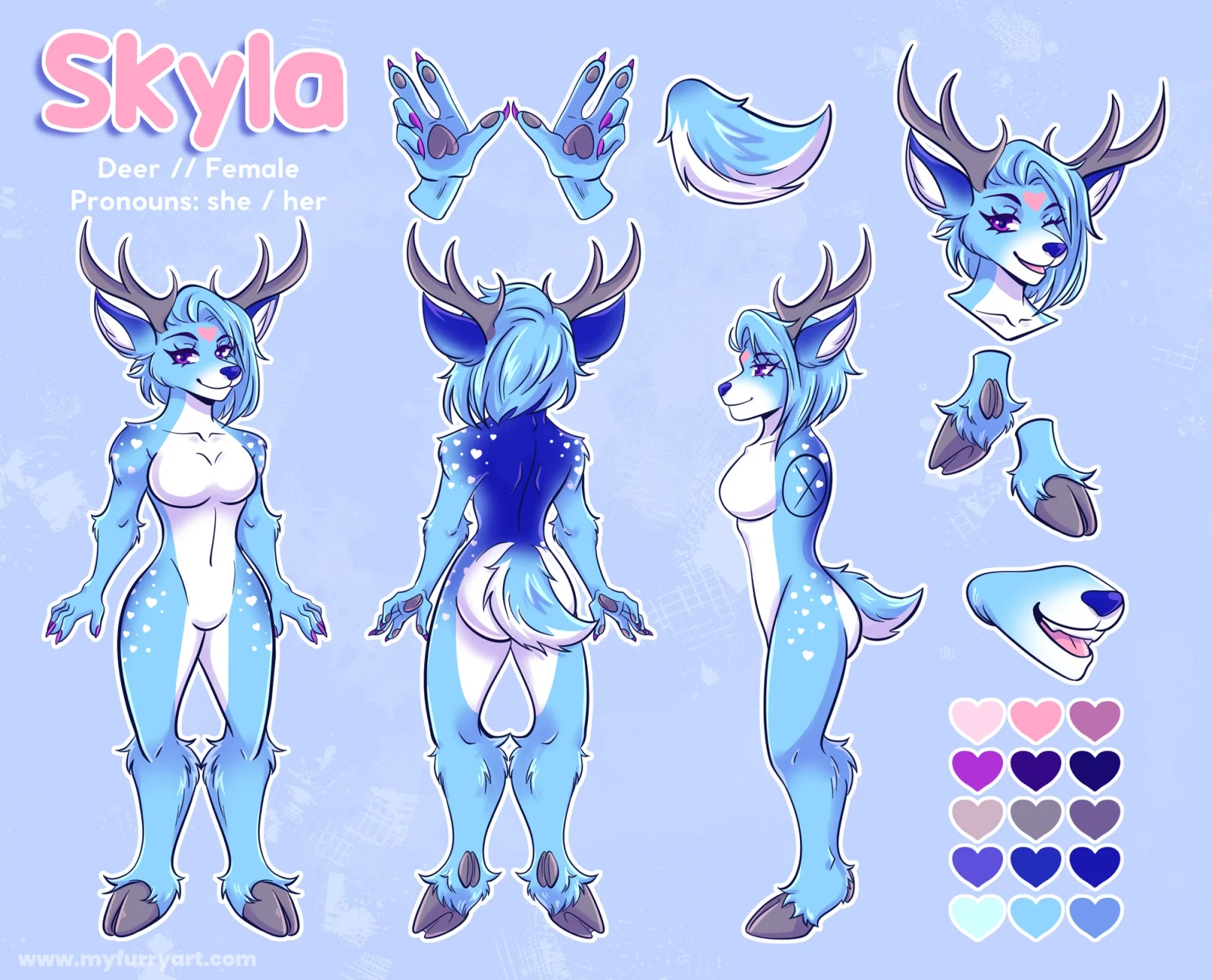
What goes on a ref sheet
The essentials
- A front view. The whole character, standing in a neutral pose, so nothing is hidden.
- A back view. Markings on the back, the tail, and the back of the head and ears. This is the view artists are most often left guessing about.
- A colour palette. One swatch for every colour: fur, scales or feathers, eyes, nose, paw pads, hair, claws. With a palette, an artist can pick the exact colour instead of guessing from a shaded drawing.
- The name. And usually the species, which helps a lot with hybrids.
The extras
Ref sheets tend to be zoomed out, so details get small. Extras fix that:
- A headshot, to show the face, the eyes and the expression up close.
- Paw pads and feet, front and back.
- An open mouth, for the teeth, tongue and mouth colour.
- The tail, if it has a pattern that's hard to see from the front.
- A side or three-quarter view, for muzzle shape, horns, wings and anything else that sticks out.
- Props and outfits that are part of the character.
- An info box: likes, dislikes, personality, a few lines of description.
What each species needs
Every species has its own details that artists get wrong when the ref sheet doesn't show them:
- Scalies and dragons: where the scales change colour, the belly plates, horns and spines, and the wings from both sides. See our dragon and scalie art.
- Avians: the wings open and closed, the beak from the side, the tail feathers, and whether the hands are wings, hands, or both. See our avian art.
- Protogens: the visor and its expressions, which parts are fur and which are armour, and the colours of the lights. See our protogen art.
- Hybrids: which part comes from which species. A side view helps here.
Ref sheets for fursuits
A fursuit maker builds your character in three dimensions, so they need more than an artist does. A fursuit-ready ref sheet usually has:
- three views: front, back and side
- flat colours, without heavy shading, so every colour and edge is clear
- close-ups of the head, paws and tail
- clean, simple markings that can actually be sewn
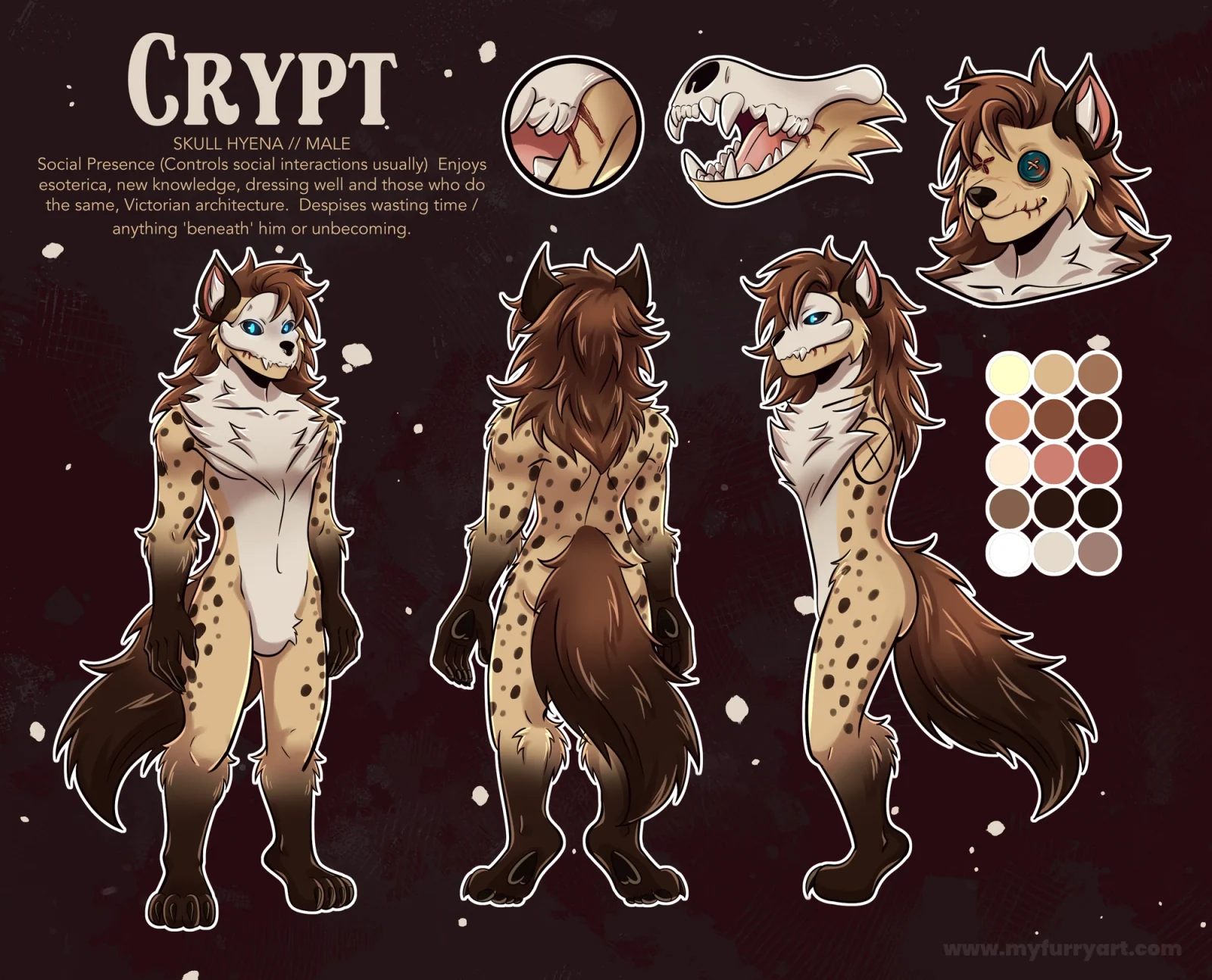
It's very difficult to commission a fursuit without one. Our Fursuit-Ready sheets have 3 poses and 2 extras for exactly this reason, and every reference sheet we make also comes in a flat-colour version. Our guide to fursuit ref sheets goes through everything a maker asks for.
Three ways to get a ref sheet
1. Draw your own on a free base
A base (also called a template or a blank ref sheet) is a ready-made outline of a furry character that you colour in yourself. You can find free ones in furry art galleries.
- Good: it's free, and it's quick if you can colour digitally.
- Not so good: your character will have the same body and pose as everyone else who used that base, and a base only exists for the most common species. Always check the base maker's rules about credit and use before you post it.
2. Use a ref sheet maker
There are online tools and games where you pick parts and colours from menus to build a character.
- Good: no drawing needed, and it's a fun way to try out ideas.
- Not so good: you can only choose what's on the menu. Unusual markings, hybrids and less common species usually aren't possible, and most artists and fursuit makers will still ask you for a proper reference.
3. Commission one
An artist draws your character from your description, in poses and with extras you choose.
- Good: it's your sona and nobody else's, drawn the way you imagine them, with every marking where it belongs. A description is enough to start from.
- Not so good: it costs money, and you need to pick an artist you can trust. Our guide to commissioning furry art covers how to check an artist before you pay.
Plenty of furries start with a base or a maker to work out their design, then commission a ref sheet once they know what they want. That works well: your coloured base makes a great reference for the artist.
What to send an artist for a ref sheet
You don't need a finished design. For our own reference sheets we ask for:
- your sona's name
- their species and sex
- a description: body type, colours, eyes, any special marks, personality, vibe
- any pictures that help us understand (optional)
- which poses and extras you'd like, and what should go in the info box
Try to be as detailed as possible, but don't worry if you're not sure about something. That's what the sketch stage is for.
How much does a ref sheet cost?
It depends on the artist and on how much is on the sheet (our guide to furry commission prices has the usual ranges). Ours start at $135 and come in three sizes: Basic (2 poses), Detailed (2 poses and 1 extra) and Fursuit-Ready (3 poses and 2 extras). The current prices are on our reference sheet page.
Every one is drawn by hand by our own artists (no AI, ever), with unlimited revisions and a full money-back guarantee. You can start small and add poses and extras later: we keep the source files so everything fits together.