Guide
How to Commission Furry Art (Guide)
By My Furry Art · Published 5 April 2022 · Updated 25 November 2026
In short
- Have a way to show how your character looks: a reference sheet is best, earlier art or a written description also works.
- Before you pay, check that the artist is open, how long they take, and what they say about refunds and revisions.
- Ask to see a sketch before any colour goes on. It is the best protection against surprises, and against AI art.
- Check how the artist takes payment, and remember that payment services have age limits.
- Be friendly and patient, and keep track of time if there is a refund window.
One of the coolest parts of being a furry is having artwork commissioned of your characters. There's nothing quite like having an idea in your head for a character brought to life through some awesome art.
Lots of furries get art of their characters drawn. While commissioning art can be an exciting process, it can also be a little intimidating for first-timers. You might have questions like: how do you even commission an artist? What do you need to have ready? How much does it cost, and how do you know you won't get ghosted, scammed, or handed something made by AI?
We've been taking furry art commissions since 2020, for over 1,000 furries, so we've seen most of what can go right and wrong. Let's take a look at what goes into getting a piece of art commissioned. After that, we'll check out the different kinds of commissions you can get for your characters.
Step 1: Know how your character looks
It's important for the artist to know how your character looks. You should have some idea of the character's appearance. But what's the best way to show it? (No character yet? Start with how to make a fursona.)
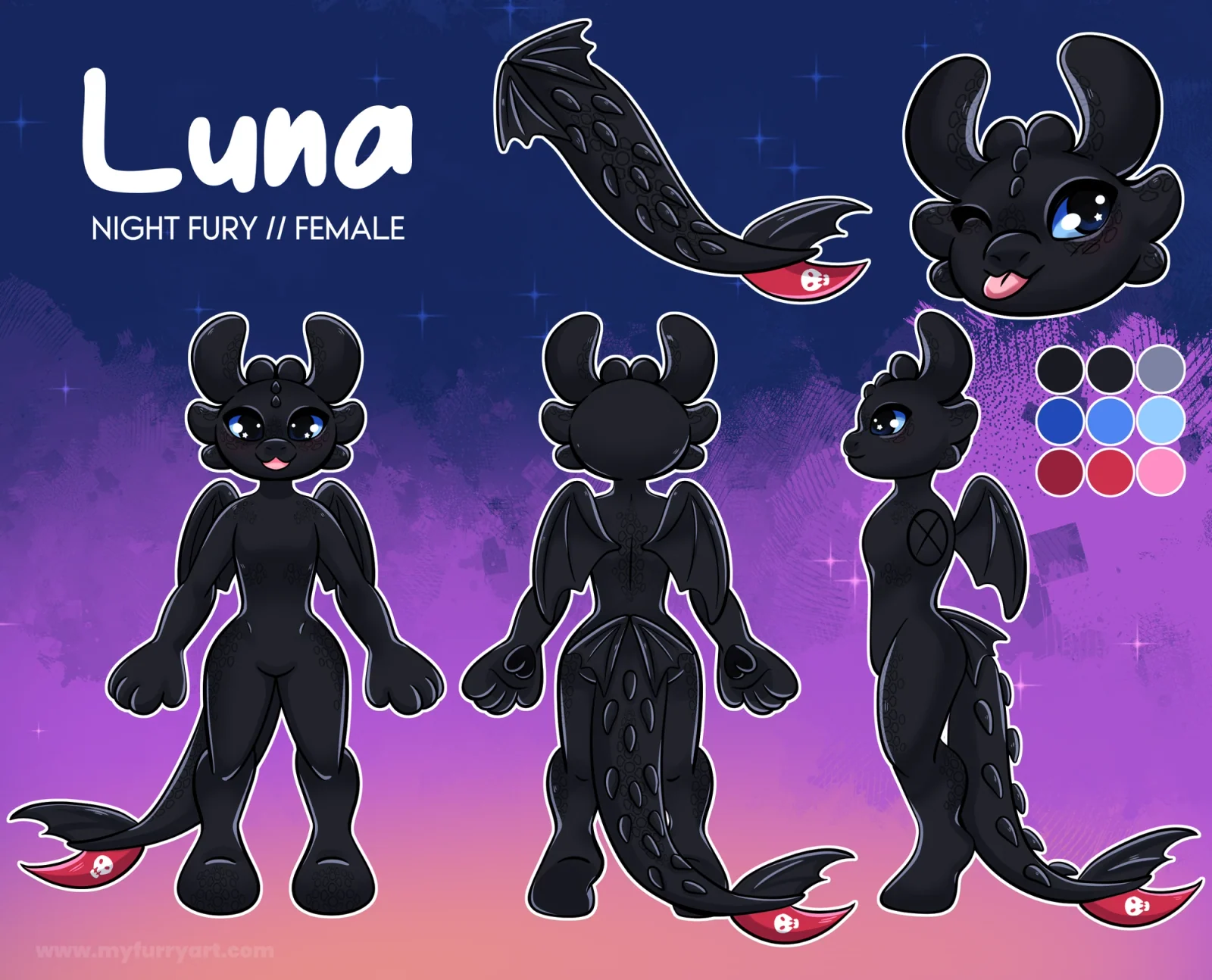
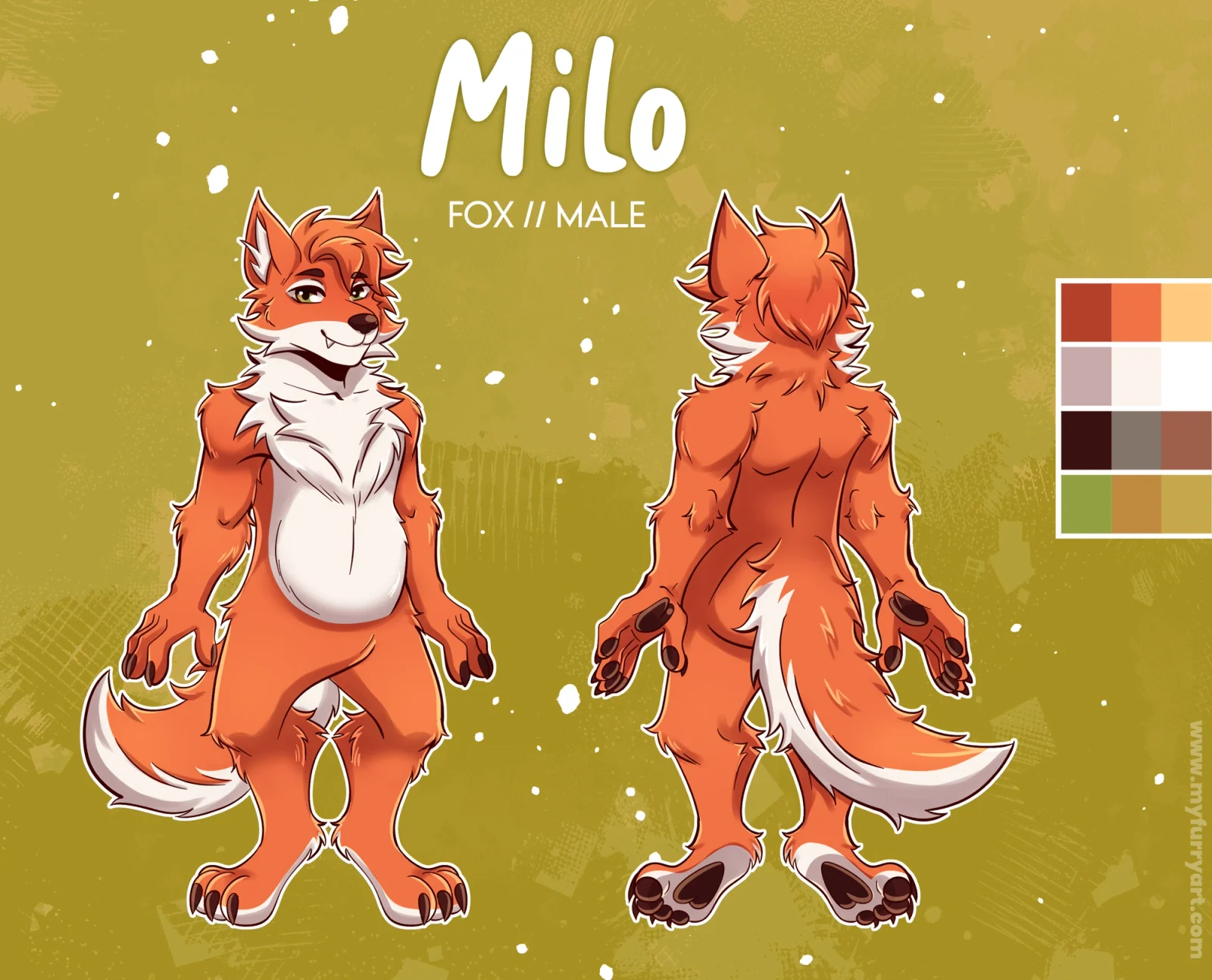
Visual references are the most useful. The best kind are reference sheets. These handy pictures usually show a front and back view of your character, along with their colours and any special markings.
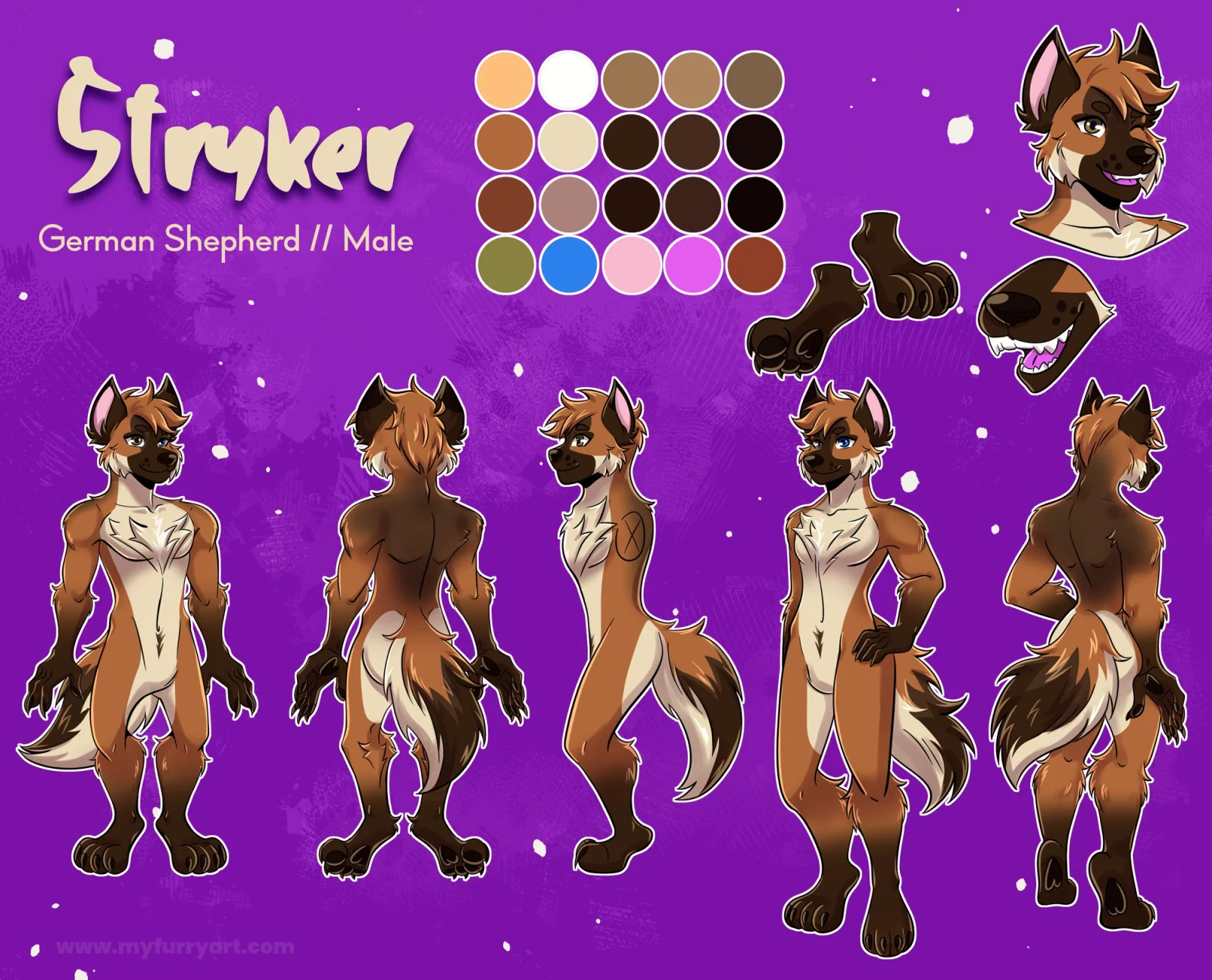
What if you don't have a ref sheet? If you have any previous commissions of your character, that can help too. At the very least, you can gather some images to help out the artist, such as how you want the hair to look, the body shape, clothing, and so on. Some visual aid is better than none!
A written description works as well. If you're not too good with words, don't worry. If you can give a basic description of the character, you're good to go. No need to be a wordsmith to tell the artist that the character has a slender body and is 5'7". A good description covers:
- the species (or the mix, for a hybrid) and the body type
- fur, scale or feather colours, and where each colour goes
- the eyes, the hair, and any special marks like scars, stripes or piercings
- the personality and the vibe: shy, cocky, sleepy, chaotic
If you want to get crafty, there are more options. Free tools like Heroforge let you build a 3D model of a character and change its pose with a few clicks, which can make a nice reference, although the choice of furry models is limited.
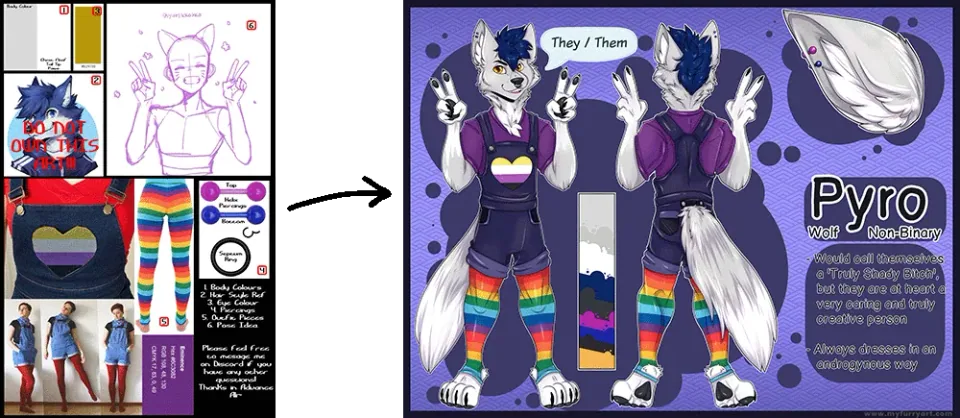
Step 2: Find an artist
There are thousands of furry artists, and they all work a little differently. We compare the main places in furry art websites: where to find furry artists. The usual ones:
- Fur Affinity and other furry art galleries, where artists post their work and their commission info.
- Social media, where many artists announce when their commissions open.
- Studios, like us at My Furry Art, where a small team of artists works in one style and commissions are always open.
Remember that each artist has their own art style. Some are realistic, some are cartoony, and some use a mix of both. They might do their shading and colouring in a unique way. Look through an artist's recent work and ask yourself: would I be happy if my character looked like this? If the answer is yes, you've found a candidate.
Step 3: Check the artist before you pay
Keeping these checks in mind will help you find an artist who not only does cool art but is also reliable.
Are they open? It's always good to see if an artist is open for commissions or quotes. Usually, you can find this on the artist's social media page, their Fur Affinity page, or their home page if they have one. If an artist doesn't have that information listed, try DMing or emailing them. Remember to be friendly and professional!
How long do they take? This is known as the turnaround time. Some artists can take a long time for art. Some have a backlog that extends for months, and you'll go to the back of it when you order. One way to check is to look at an artist's gallery or social media: see how long it took between them announcing commissions and posting sketches or finished pieces. You can also just ask for an estimate.
What do other clients say? Look for reviews and testimonials from real clients. You can even do a bit of sleuthing and see if the artist comes up on warning sites such as Artists Beware, which exist to help you avoid artists who are especially troublesome to work with.
What happens if it goes wrong? See if they have information on how refunds work, and how many revisions you can have. Plenty of artists don't offer refunds at all once they've started, and many cap the number of changes. Neither is wrong, but you should know before you pay. (For comparison: at My Furry Art every order comes with unlimited revisions and a full money-back guarantee.)
Is there a real business or person behind it? A long history is the best sign. An artist or studio that has been delivering art for years, with a gallery and reviews that go back just as long, has a reputation to lose.
Step 4: Make sure you're paying for real art, not AI
This step didn't exist when we first wrote this guide in 2022. Today it's a real worry.
AI image generators can turn out a furry picture in seconds, and some sellers pass those pictures off as commissions. Here's how to protect yourself:
- Ask how they work. A real artist will happily tell you. If the answer is vague, walk away.
- Ask to see the sketch first. Hand-drawn art is built in stages: a rough sketch, then clean lines and flat colours, then shading. An artist can show you each stage, and change it when you ask. Someone selling AI images usually can't.
- Look for a history. A gallery that goes back years, in a consistent style, is very hard to fake.
- Look at the details. A ref sheet has to show the same markings from the front and from the back. AI images often struggle with exactly that, as well as with paws, text and patterns.
For the record: every piece at My Furry Art is drawn by hand by the artists on our team. You see the sketch, then the colours, then the shading. No AI, ever.
Step 5: Sort out payment
You'll also need a way of paying the artist. Many use PayPal, as it's quick, easy and convenient. Others use a card checkout, such as Stripe. If neither of those works for you, see what other payment methods are available. But not "exposure". Artists need to pay bills, too!
A few things worth knowing:
- Age limits. Many payment methods have one. PayPal requires you to be at least eighteen to open an account. Stick to those rules: if they find out you weren't of age when you opened an account, they'll lock or even shut it down.
- Deposits and instalments. Some artists take full payment upfront, some take half, and some let you pay in instalments. Ask if it isn't listed.
- Keep it traceable. Pay through an invoice or a checkout page, not as a gift to a friend. A proper payment leaves a record and gives you a way to open a dispute if something goes badly wrong.
- Don't lose track of time. This matters if the artist has anything in their terms about refunds. Payment services have a time limit on opening disputes as well.
Step 6: Work with your artist
Once you've paid, the fun part starts. A typical commission goes like this:
- The sketch. You'll get a rough version first. This is the moment to ask for changes: the pose, the body type, the expression. It's much harder to change these later.
- Flat colours. The clean drawing with its base colours. Check that every marking and colour is where it should be.
- Shading and details. The finished piece.
A few tips as a client:
Expect the artist's style. Your character might look a little different from how you imagined it. This is twice as true if you're using a description instead of a ref sheet. Words can mean different things to different people: an artist might see the word "chubby" or "slender" in a different way than you.
Be specific with feedback. "Can the tail be longer and fluffier?" is much easier to act on than "something feels off".
Practise patience. It's good to keep track of the turnaround time, but don't send daily update requests. That'll more than likely annoy the artist or even make them uncomfortable. Checking in every two weeks or so, if it takes that long, is fine. Keep in mind that if you're in a queue, being further down the list means it might be a few weeks before you even get a sketch.
And always remember: be friendly and professional about it!
What kinds of furry art can you commission?
So we now know some good pointers when commissioning art. But what types of commissions can a furry get? Let's take a look at a few examples.
Reference sheets (ref sheets)
Ref sheets are art that's used to show off a character's design. These will usually have a front and back image of the character, though you can get more added, such as expressions or key accessories for your character, usually called props. Some ref sheets show the front, back and sides of a character.
It's worth considering extras such as a closer look at anything special, like the tail or paw pads. Ref sheets tend to be zoomed out, so extras that focus on those features give a nice, closer look.
If you're going to be commissioning lots of art, ref sheets are invaluable. They're also very handy for commissioning fursuits. In fact, it's very difficult to commission a fursuit without one. We wrote a separate guide on what a fursona ref sheet is and what goes on one.
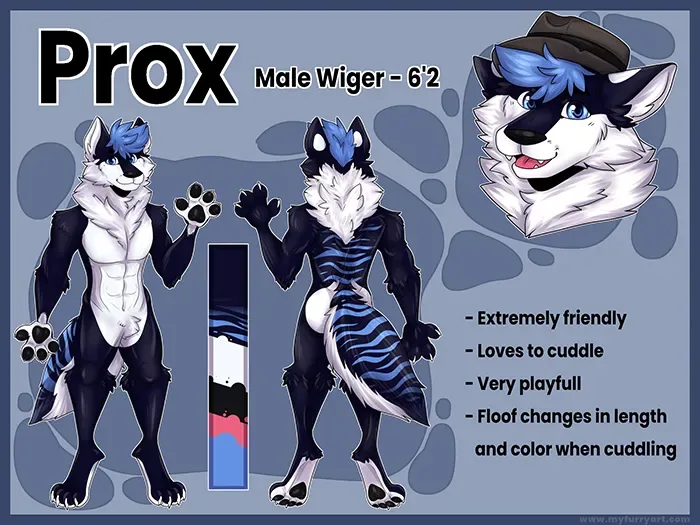
Our furry reference sheets start at $135.
Icons, profile pictures and badges
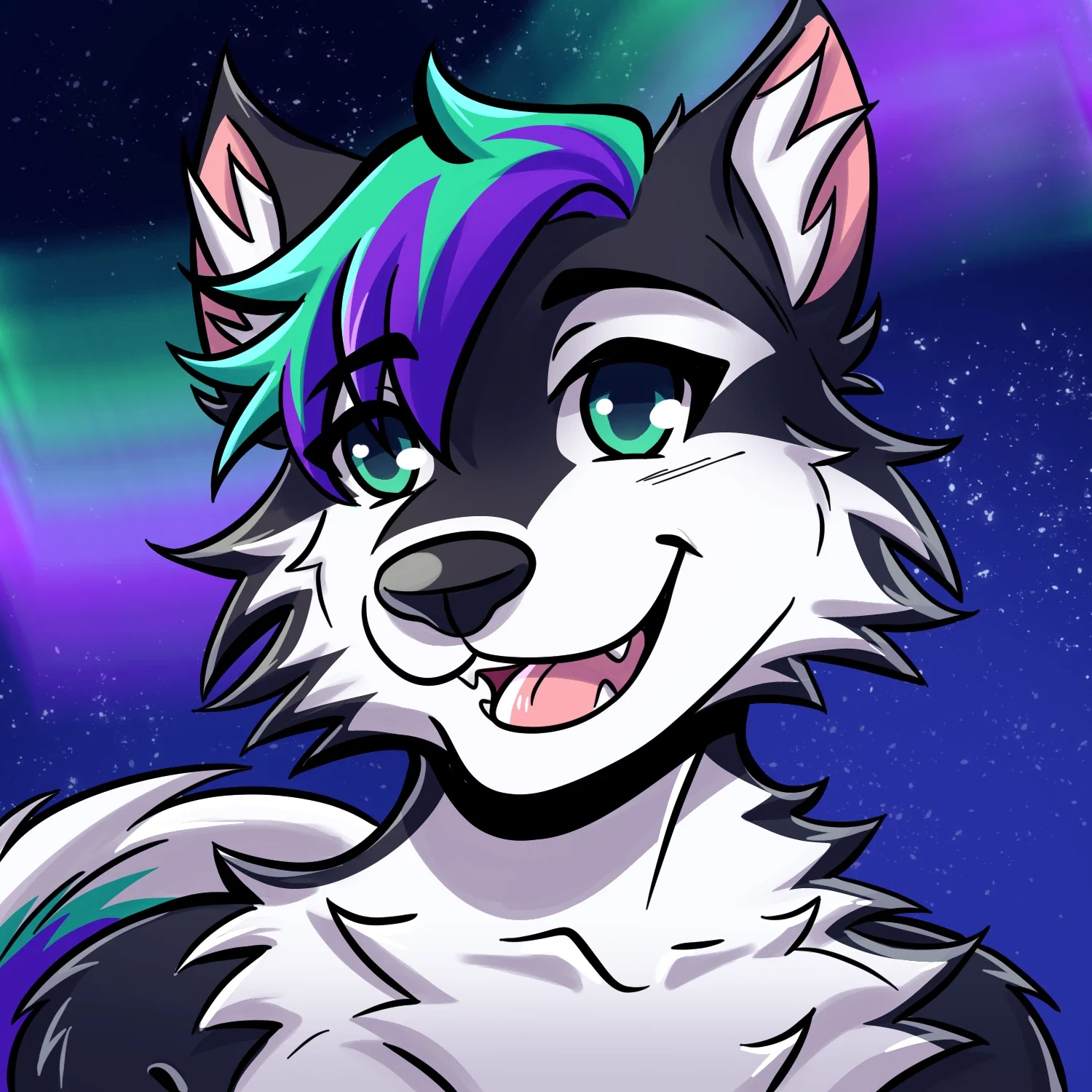
Icons are art of a character's bust, or even just from the neck up. This art is useful for chat apps, like Telegram and Discord, and for social media. You can set your icon to be your profile picture and give a cool first impression.
While you could resize and crop any piece of art, getting an icon is still useful. These are drawn with a profile picture in mind, so you get something that fits just right, even at a tiny size. For inspiration, see our furry pfp ideas.
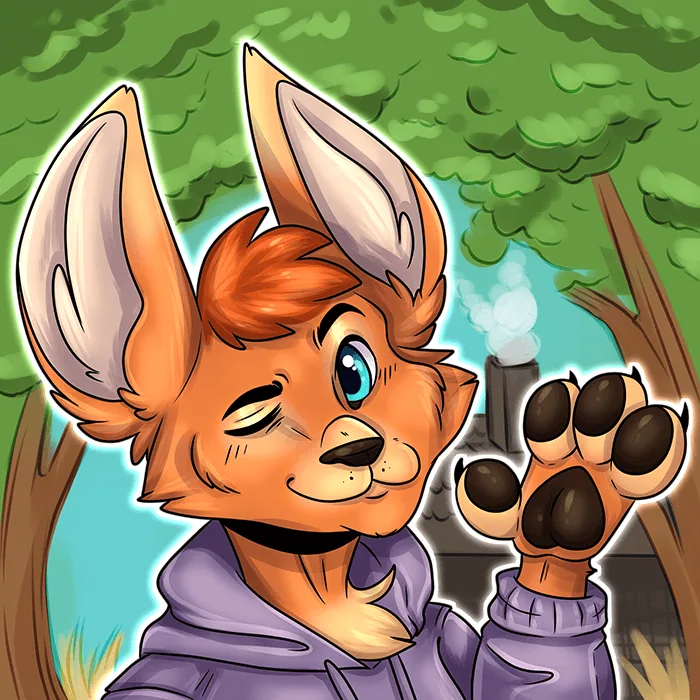
Our furry icons are $58, square or round.
Stickers
Stickers are smaller images used in chat apps such as Telegram and Discord. Some apps have stickers built in, so with a few quick taps you can send one.
These are a cute, fun way of interacting with other furs. Many even use them like emotes. Why use a generic happy face when you can use your own character giving an adorable smile? Or send a sticker of your character hugging the friend you haven't seen since the last con? You can also use stickers to show your character's personality, favourite things, and anything else you can think of.
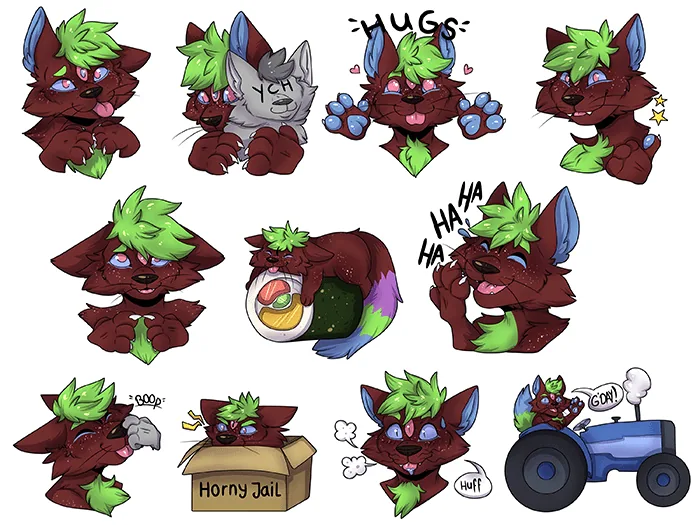
Our furry sticker packs start at $69 for 5 stickers. Each app wants its own size: see sticker and emote sizes for Telegram, Discord, Twitch and WhatsApp.
Drawings and general art
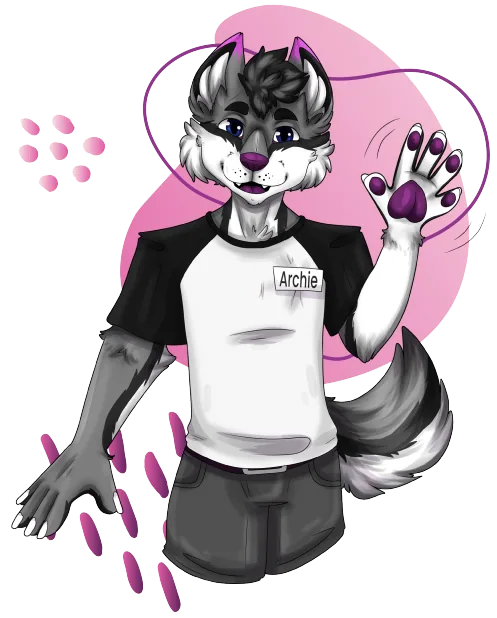
There's also a whole world of art that you can get commissioned. Some artists offer sketches, or different colouring styles such as flat colours or full shading. These options often come at different prices, with sketches being the cheapest. You could get art with a detailed background, or on a plain one. Your imagination, and budget, are the limit!
Art made in this way has various uses, too. Many furs upload commissions to their gallery. Others print the art and hang it up in their room.
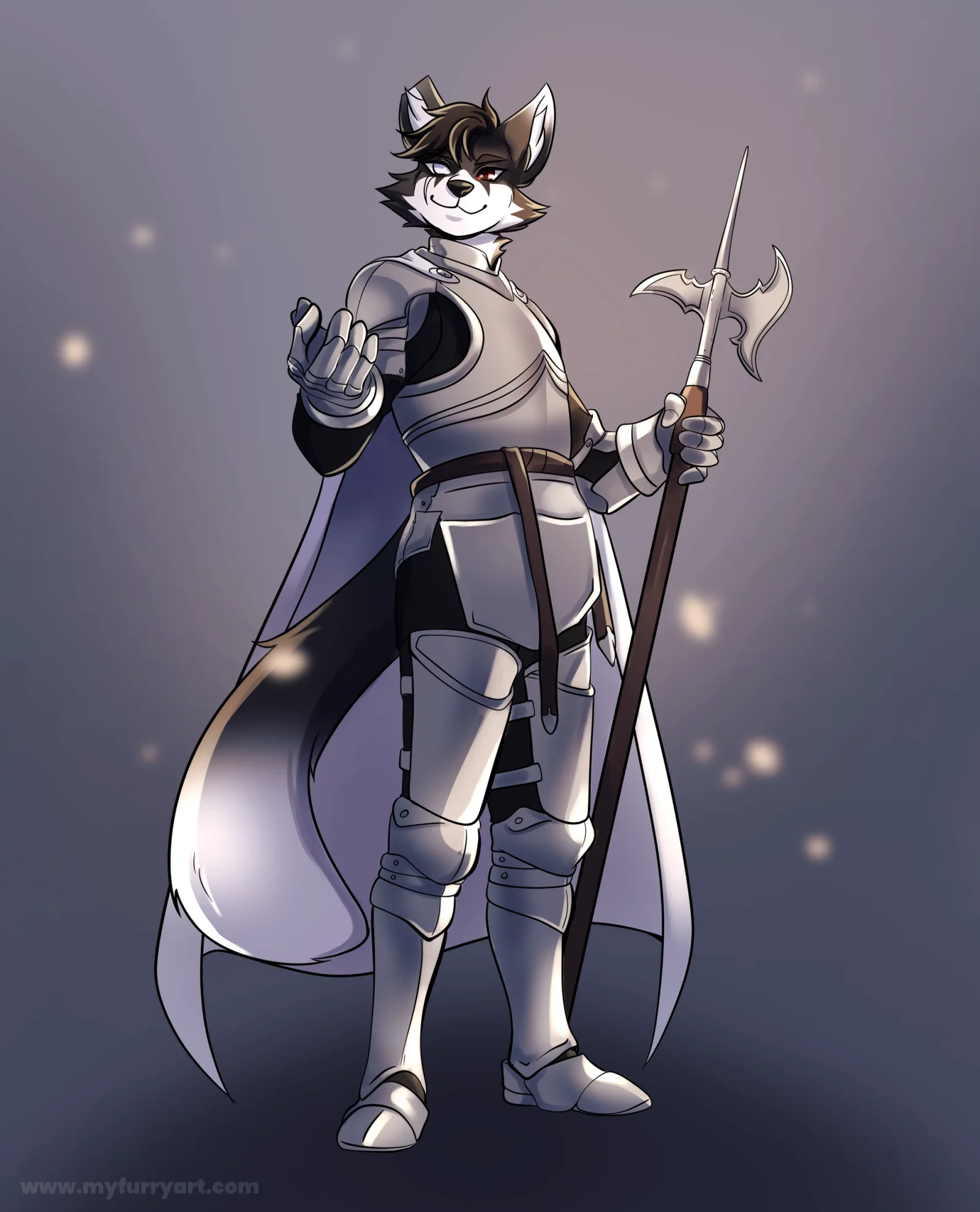
Our furry drawings start at $135 for one character.
How much does furry art cost?
It depends on the artist and on what you ask for. Prices across the fandom run from a few dollars for a quick sketch to several hundred for a detailed scene. What moves the price most:
- How many characters are in the picture.
- How finished it is: a sketch costs less than flat colours, and flat colours cost less than full shading.
- The background: none, simple, or a fully detailed scene.
- How much of the character is shown: an icon costs less than a full body.
- Extras: more poses on a ref sheet, props, an NSFW version.
A good artist lists their prices upfront, so you know the total before you pay. As an example, these are ours: reference sheets from $135, drawings from $135, icons from $58 and sticker packs from $69, each with unlimited revisions included. Our guide to furry art commission prices has the usual ranges and our full price list.
Questions first-timers ask
Can I commission art without a ref sheet? Yes. A written description and a few pictures that show what you mean are enough for most artists. If you plan to commission more art later, getting a ref sheet first will save you describing your character every time.
How long does a commission take? Anywhere from a few days to several months, depending on the artist's queue. Always ask before paying. With us, the first sketch usually arrives in 2 to 4 days and most projects are finished within 2 weeks.
Is it rude to ask for changes? Not at all, as long as you ask at the right time. The sketch stage is made for changes. Asking for a new pose after the piece is fully shaded is a different story, and many artists will charge for that.
What if I don't like the result? Check the artist's terms before you start. Some offer revisions, some offer refunds, some offer neither. If it matters to you, pick an artist who puts it in writing.
Can I use the art commercially? Usually you're buying the art for personal use: your profile, your gallery, a print for your wall. Selling it on merchandise is a different, more complicated and more expensive arrangement. Ask the artist first.
Ready to commission?
Commissioning furry art for your character is fun, and it can be exciting to see how others interpret and draw your character.
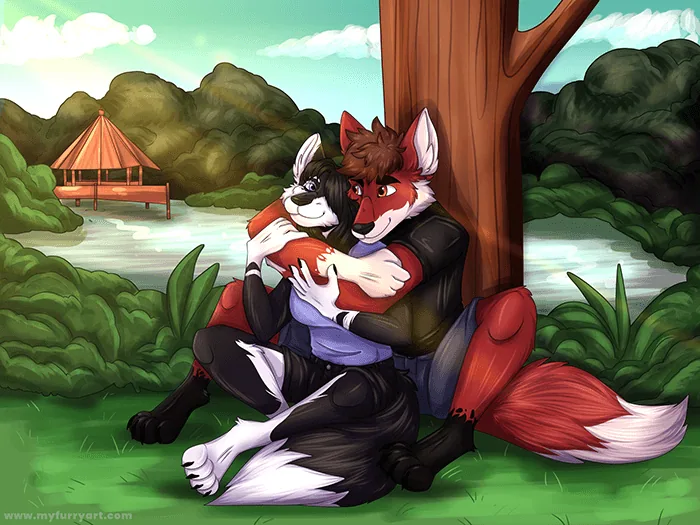
There are many artists out there that offer all kinds of services, styles, and more. If you're looking for a good place to start, consider My Furry Art. We have a full team of friendly artists with beautiful, flexible styles, unlimited revisions, and a no-questions money-back guarantee.