Ref sheet examples
Furry ref sheet examples: 28 real fursona reference sheets
By My Furry Art · Published 25 November 2026
In short
- Every sheet here was drawn by hand for a real client. Tap any of them to see it full size.
- The simplest sheets show two views and a colour palette. That is enough for most artists.
- Close-ups, an info box and a third view add detail. Fursuit makers usually want all three.
- Use the examples to choose your own poses and extras before you commission.
The quickest way to work out what you want on a reference sheet is to look at a lot of them. These are 28 sheets we've drawn for clients, grouped from the simplest to the most detailed, each with a note on what it shows.
If you're new to ref sheets, our guide to what a fursona ref sheet is and what goes on one explains the parts.
Two views: the essentials
A front view, a back view and a colour palette. Any artist can draw your character from this.
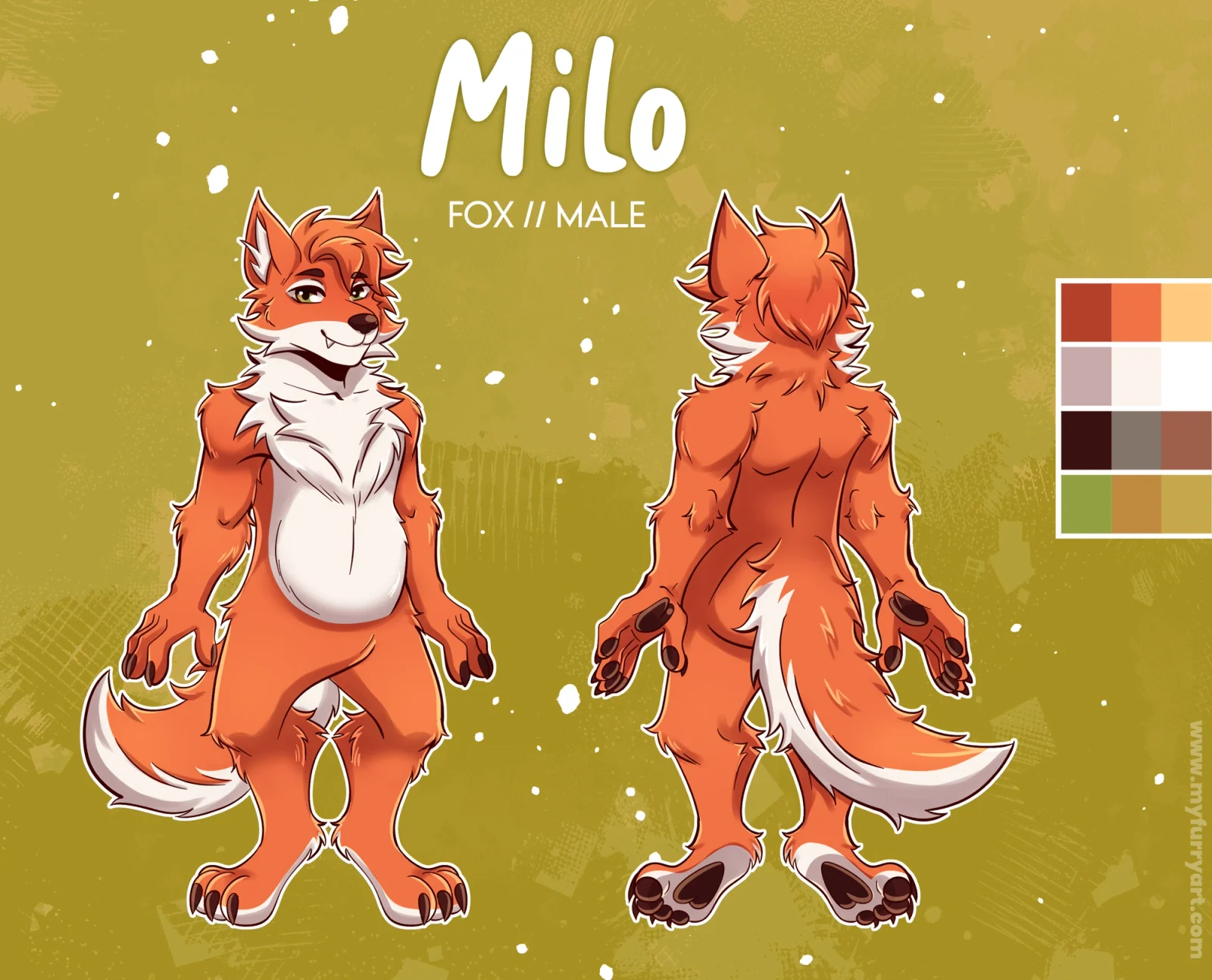
Front and back, the name, the species and a palette. This is the classic two-pose sheet. The white underside of the tail only shows from behind, which is why the back view matters.
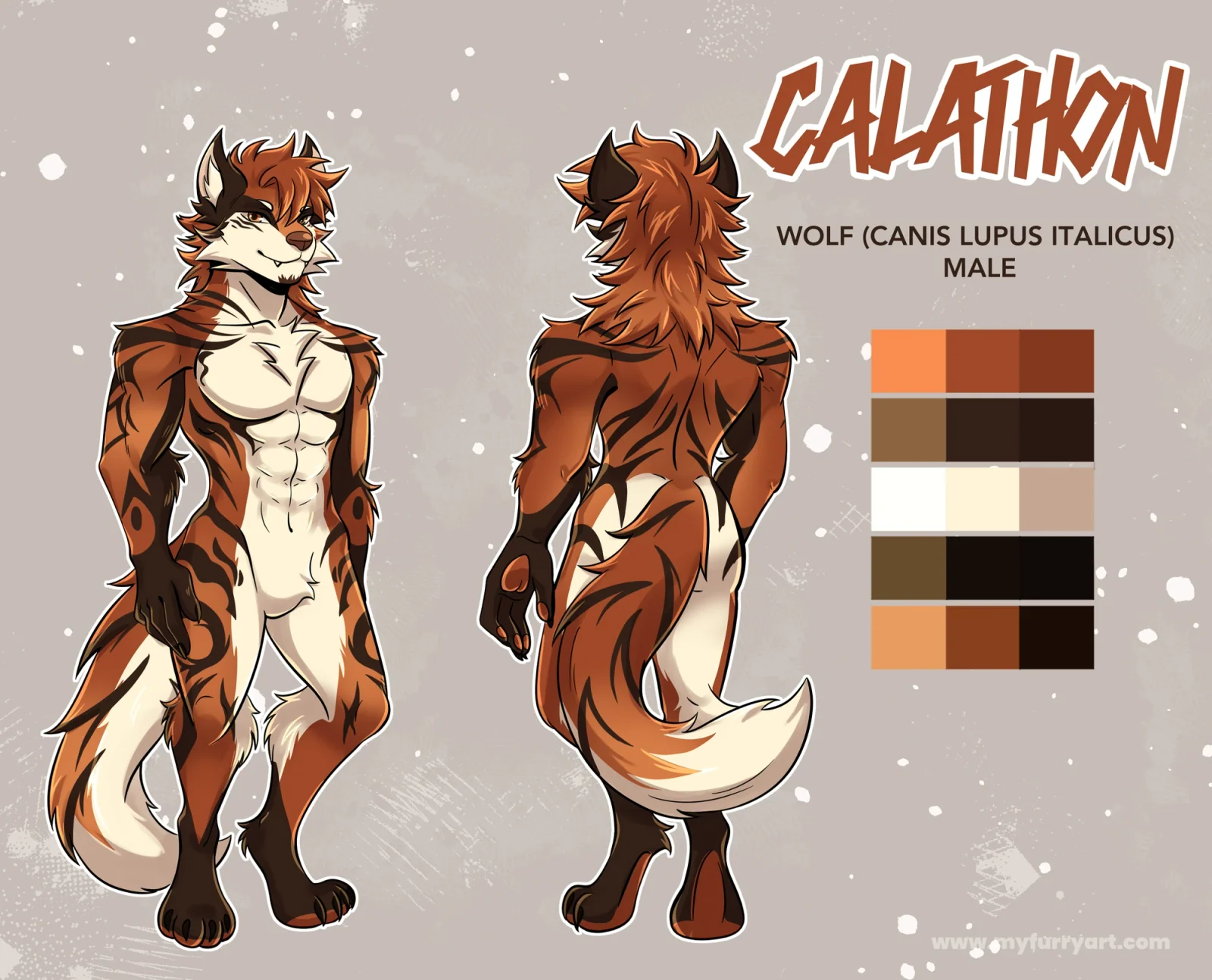
The dark stripes carry on across the back and down the tail. Without a back view, the next artist would have to guess where they go.
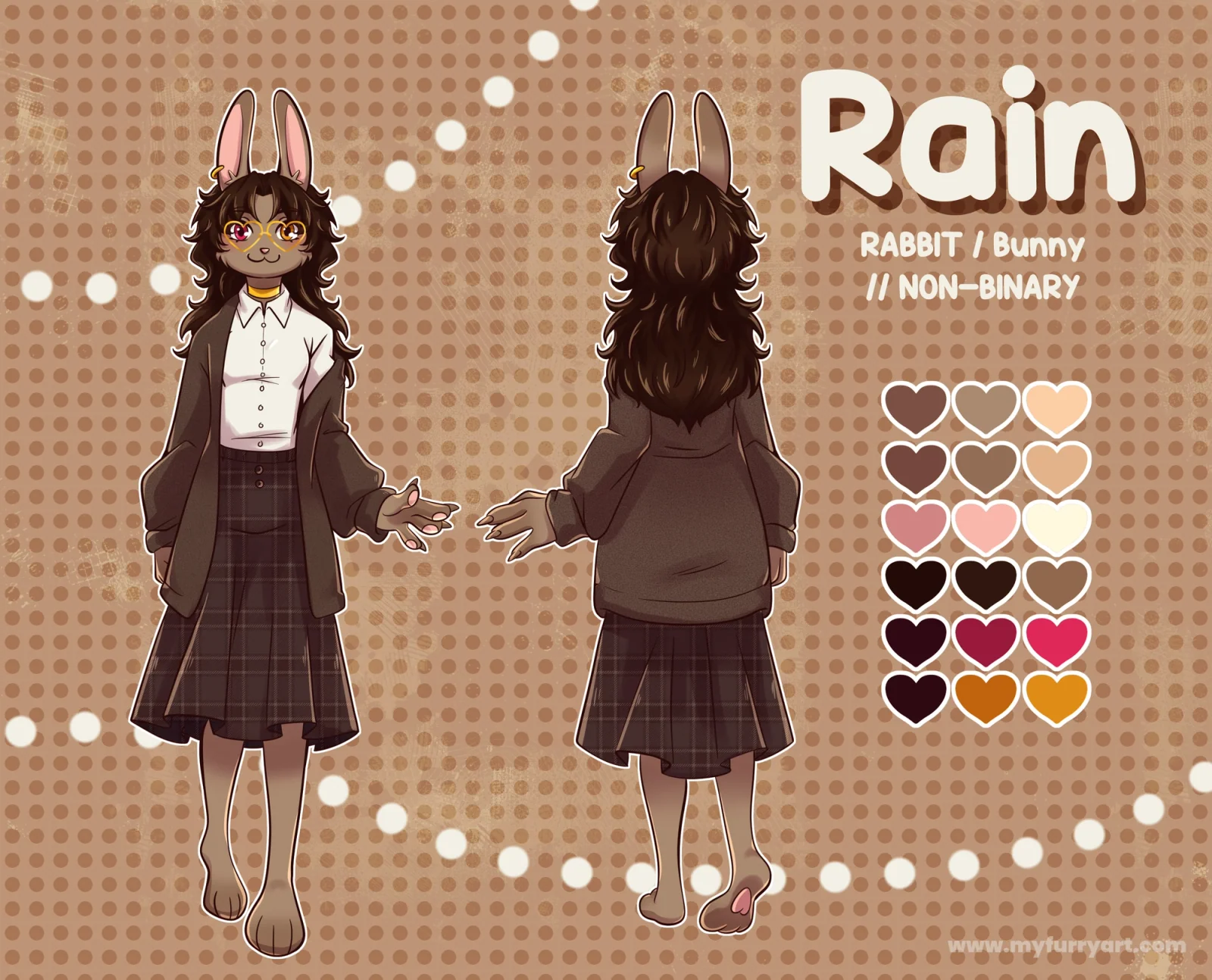
A sona can be shown clothed if the outfit is part of who they are. Here the cardigan, the plaid skirt and the heart-shaped glasses are the character.
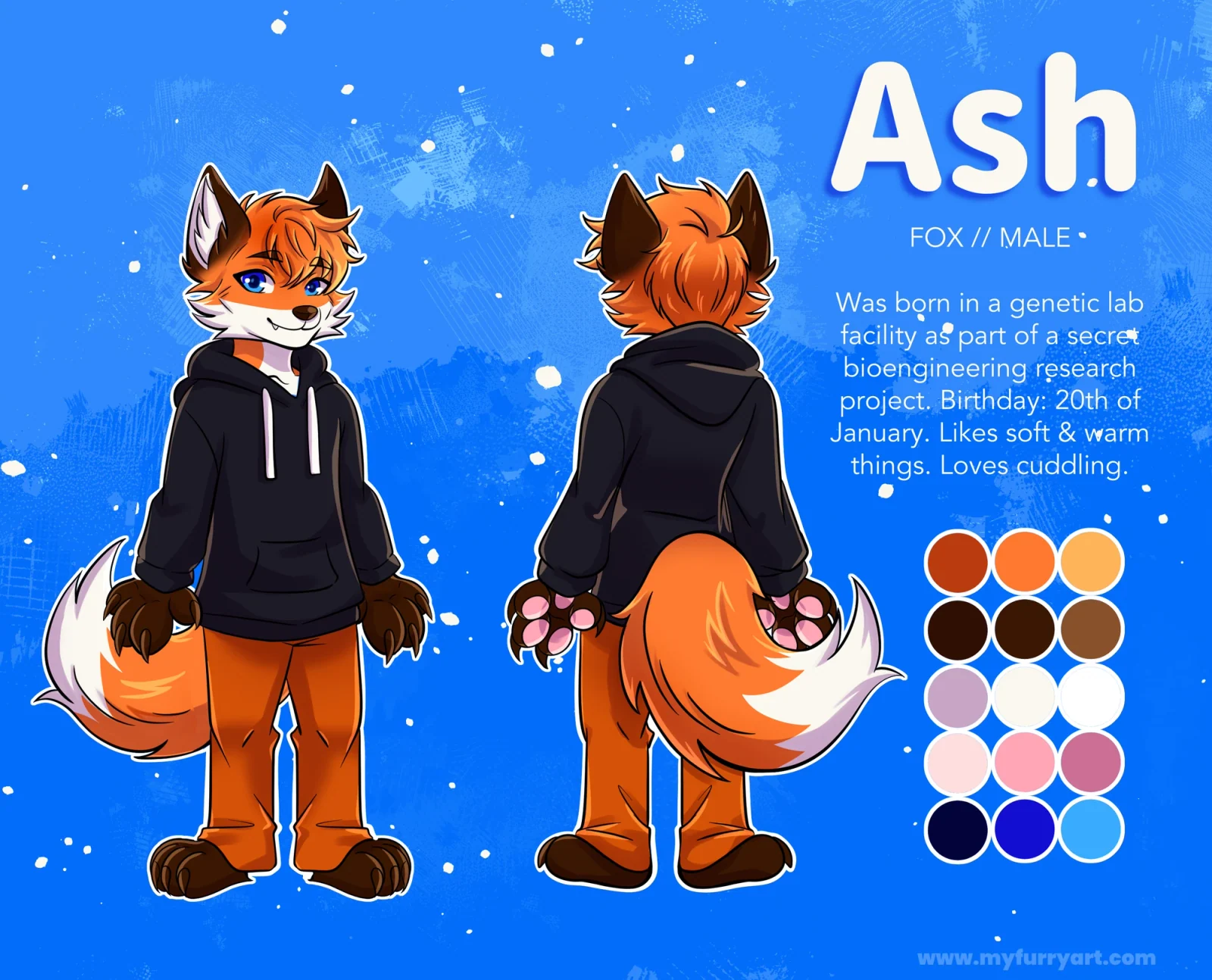
Another clothed sheet: the hoodie stays on, front and back, with a few lines of backstory beside him.
Two views with extras
Extras are close-ups of the parts that are hard to read at full size, such as a headshot, a tail or paw pads, and an info box for a few words about the character.
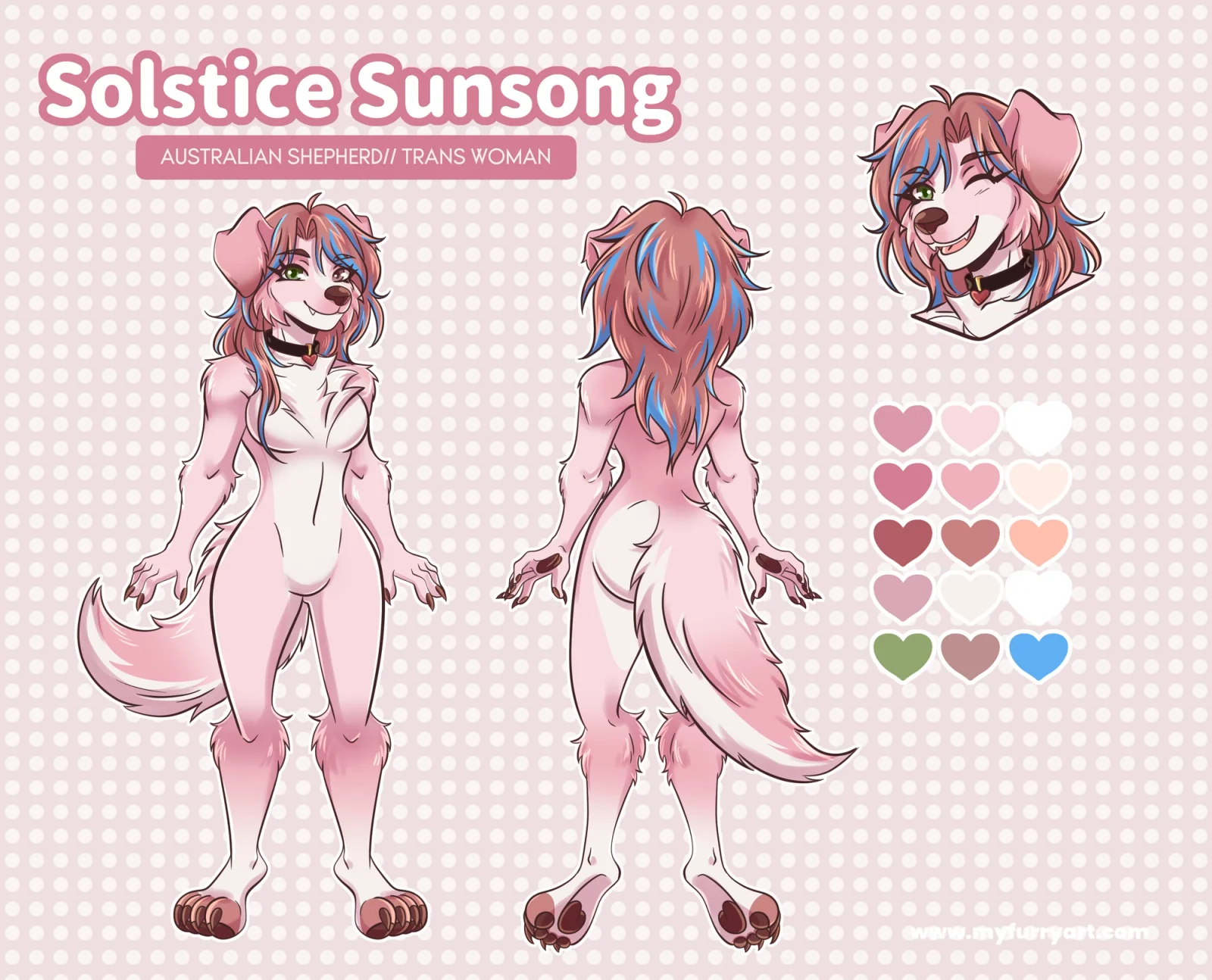
Two views and a headshot. The close-up shows the blue streaks in the hair, the collar and the expression, all of which get lost at full-body size.
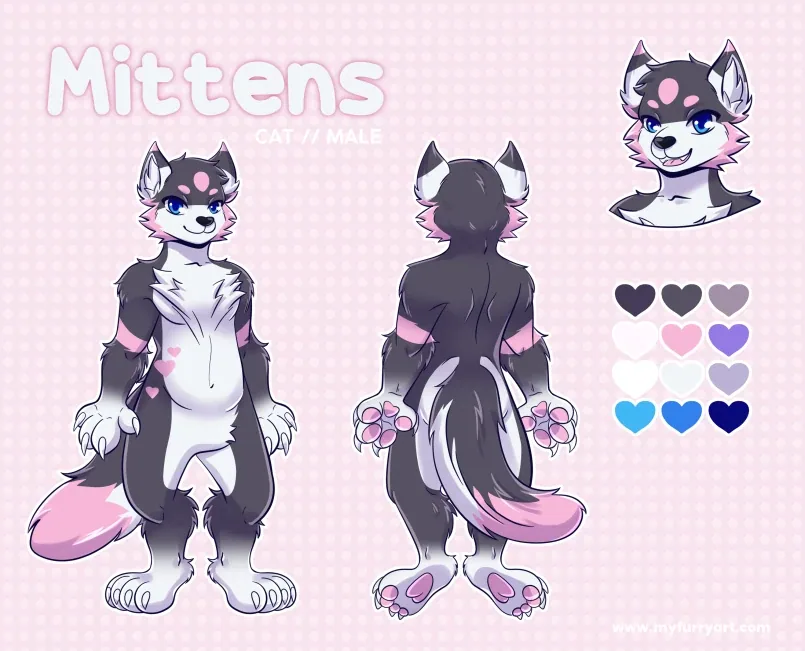
Two views and a headshot again. The palette is drawn as hearts, which suits the character. A palette can have as much personality as the sona.
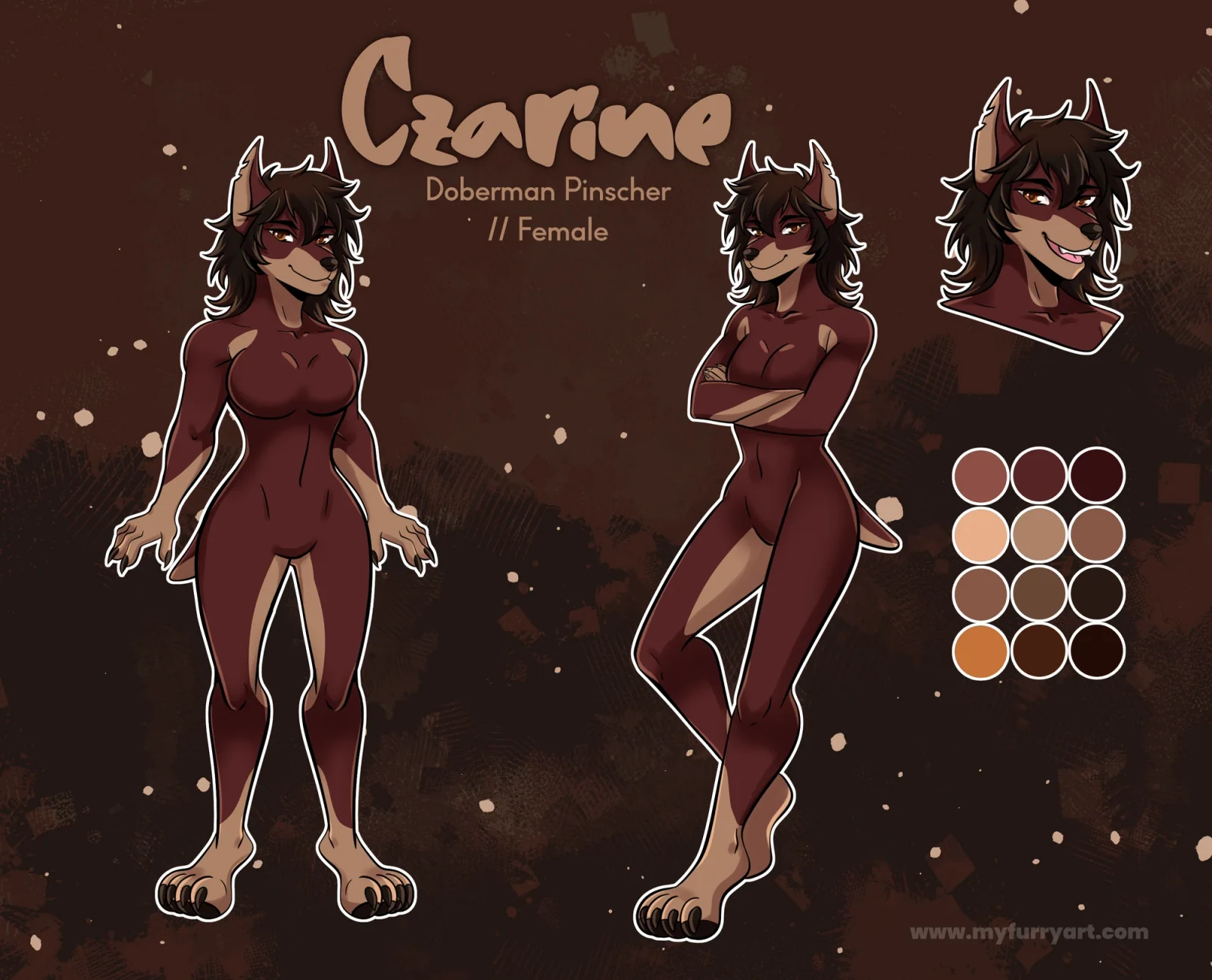
The second pose has attitude: arms folded, legs crossed. A pose can say as much about a character as a paragraph of text.
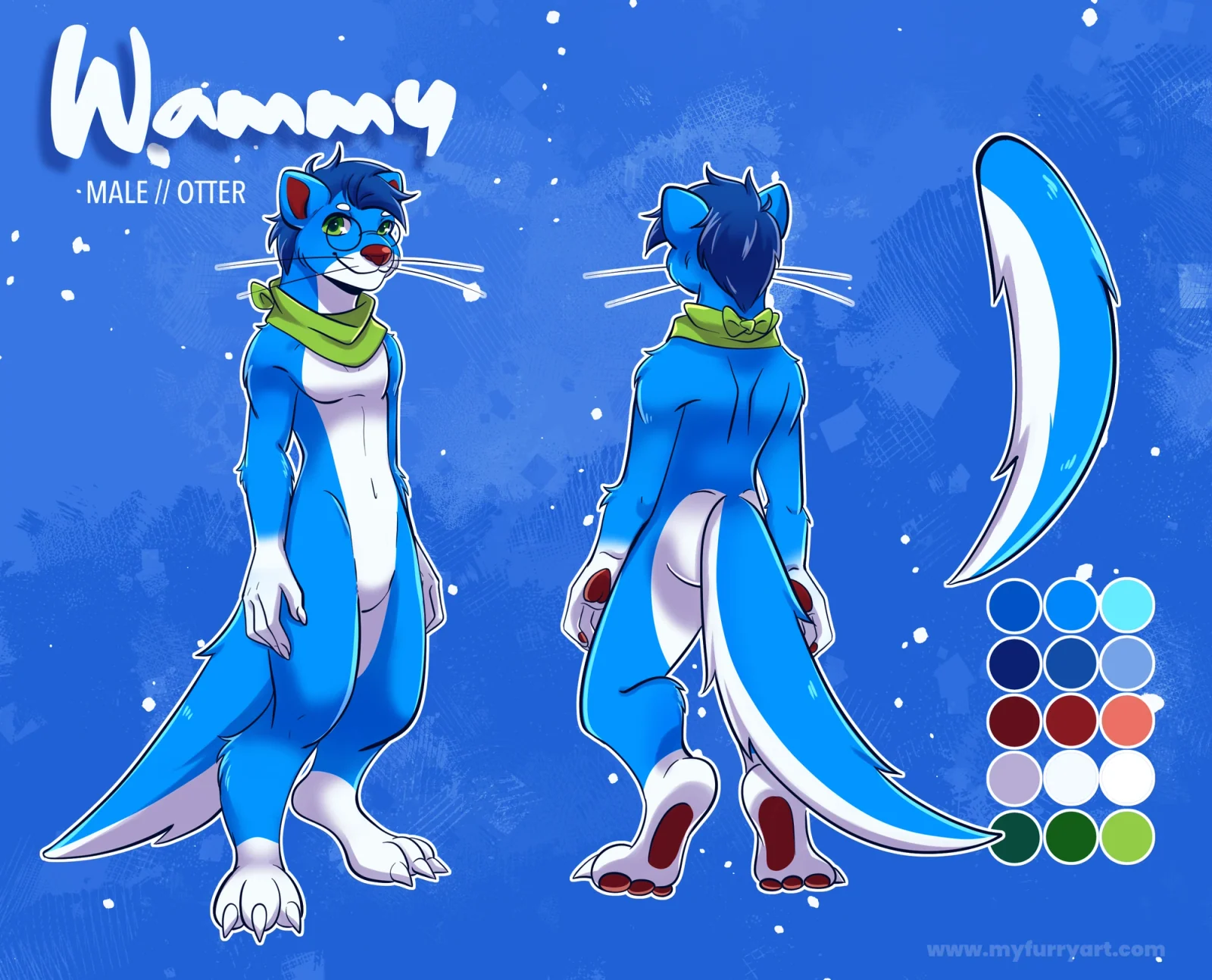
The tail has its own close-up, so the white stripe along it is clear. The scarf and glasses are drawn on, and the back view shows how the scarf ties.
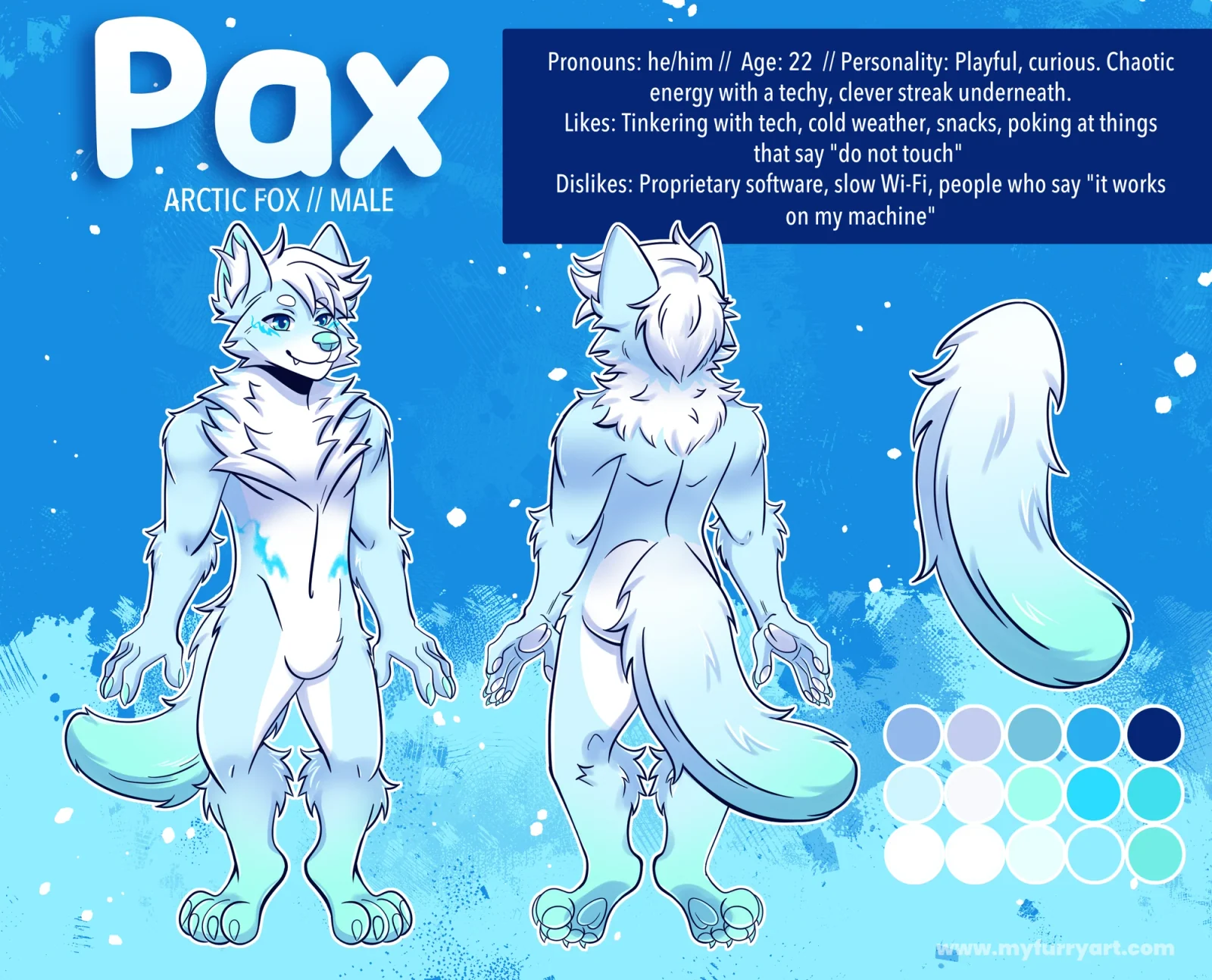
A tail close-up and an info box: pronouns, age, personality, likes and dislikes. Useful for any artist who wants to get the mood right.
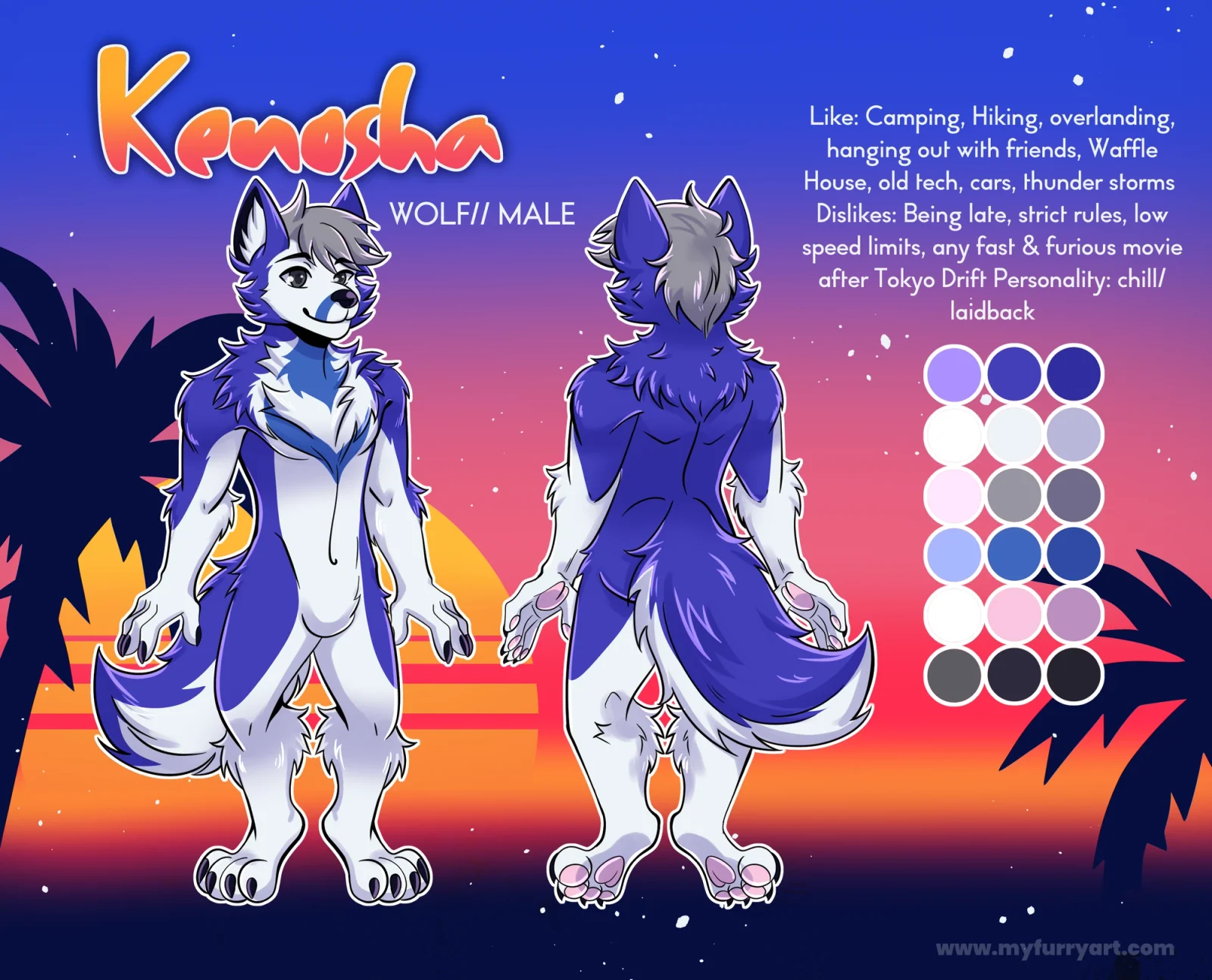
The sunset background sets the mood without getting in the way of the character. Likes, dislikes and personality sit above the palette.
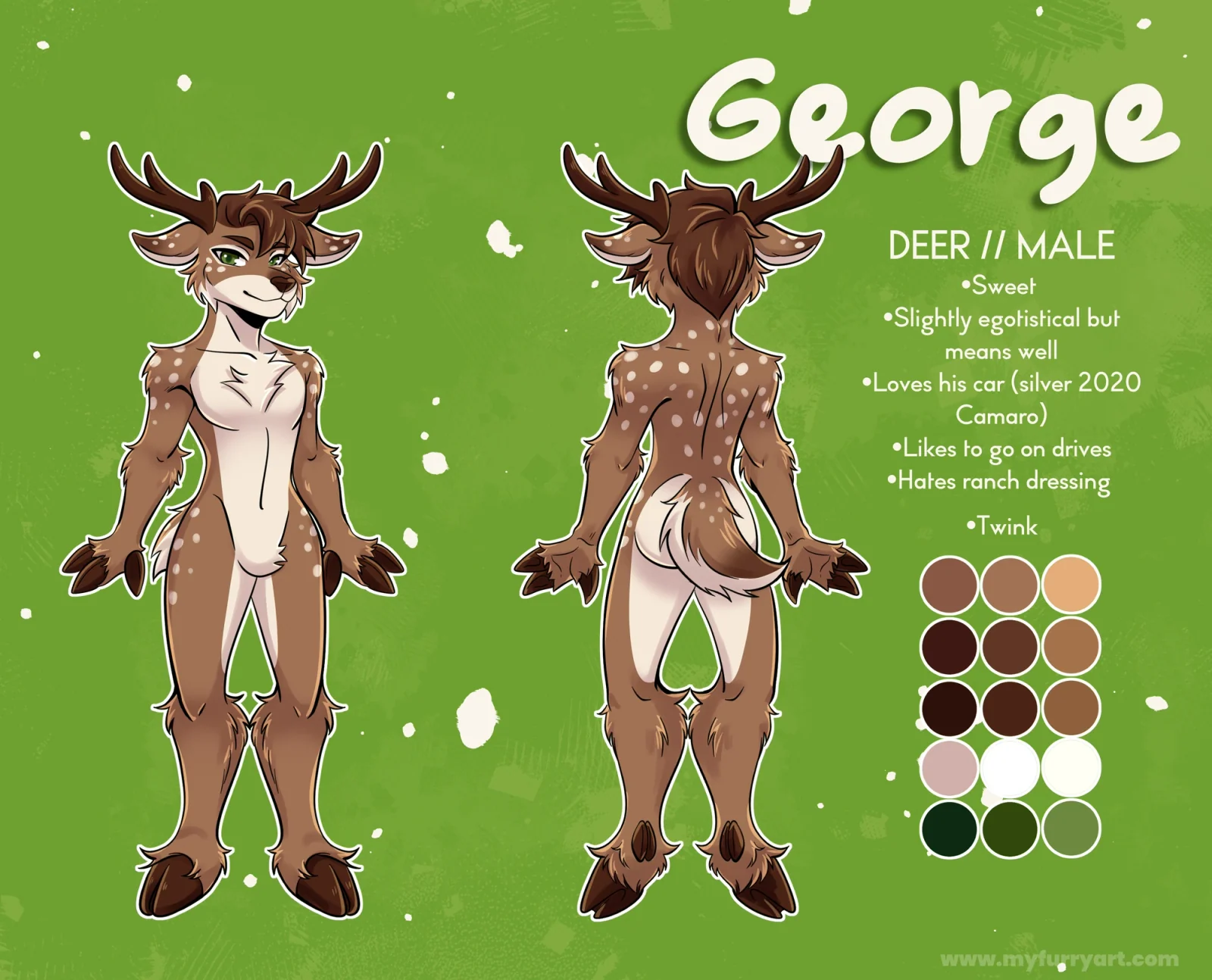
The info box is a short list, which is all it needs to be. The spots are shown across the back as well as the front.
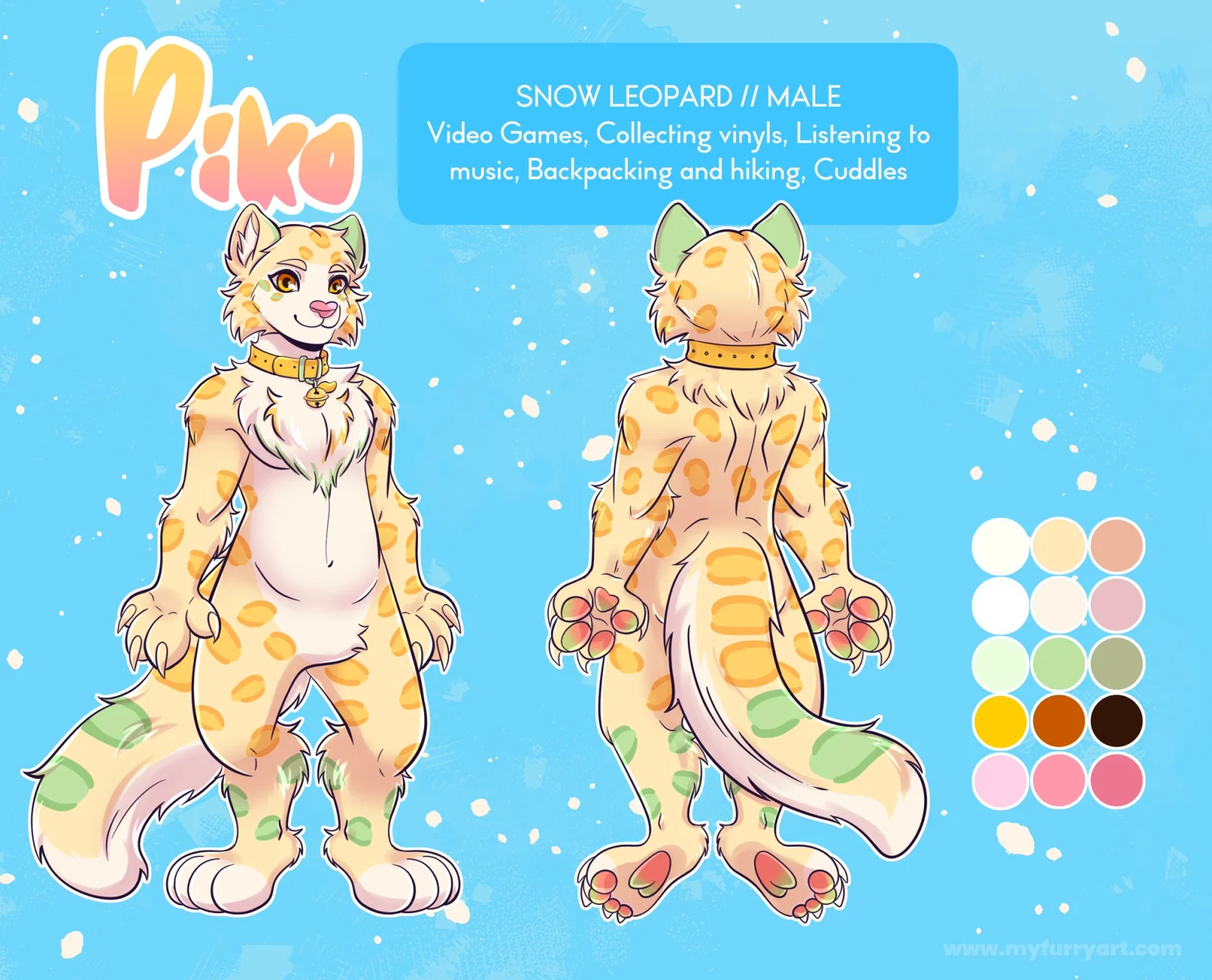
Unnatural colours on a real species. The orange and green of the spots are in the palette, so nobody has to pick them off the drawing.
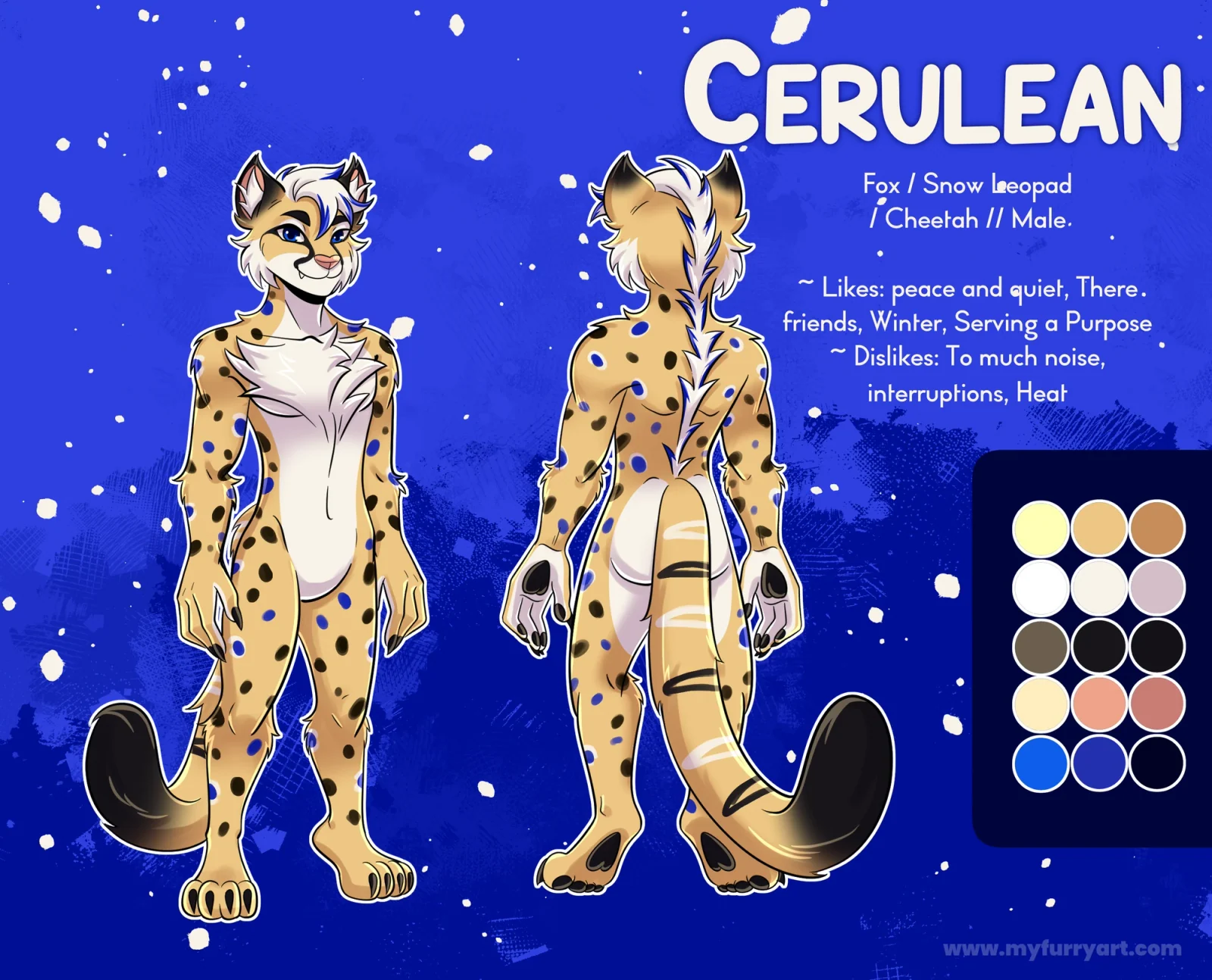
A three-way hybrid. The species line says which animals are in the mix, and the back view shows the mane and the striped tail.
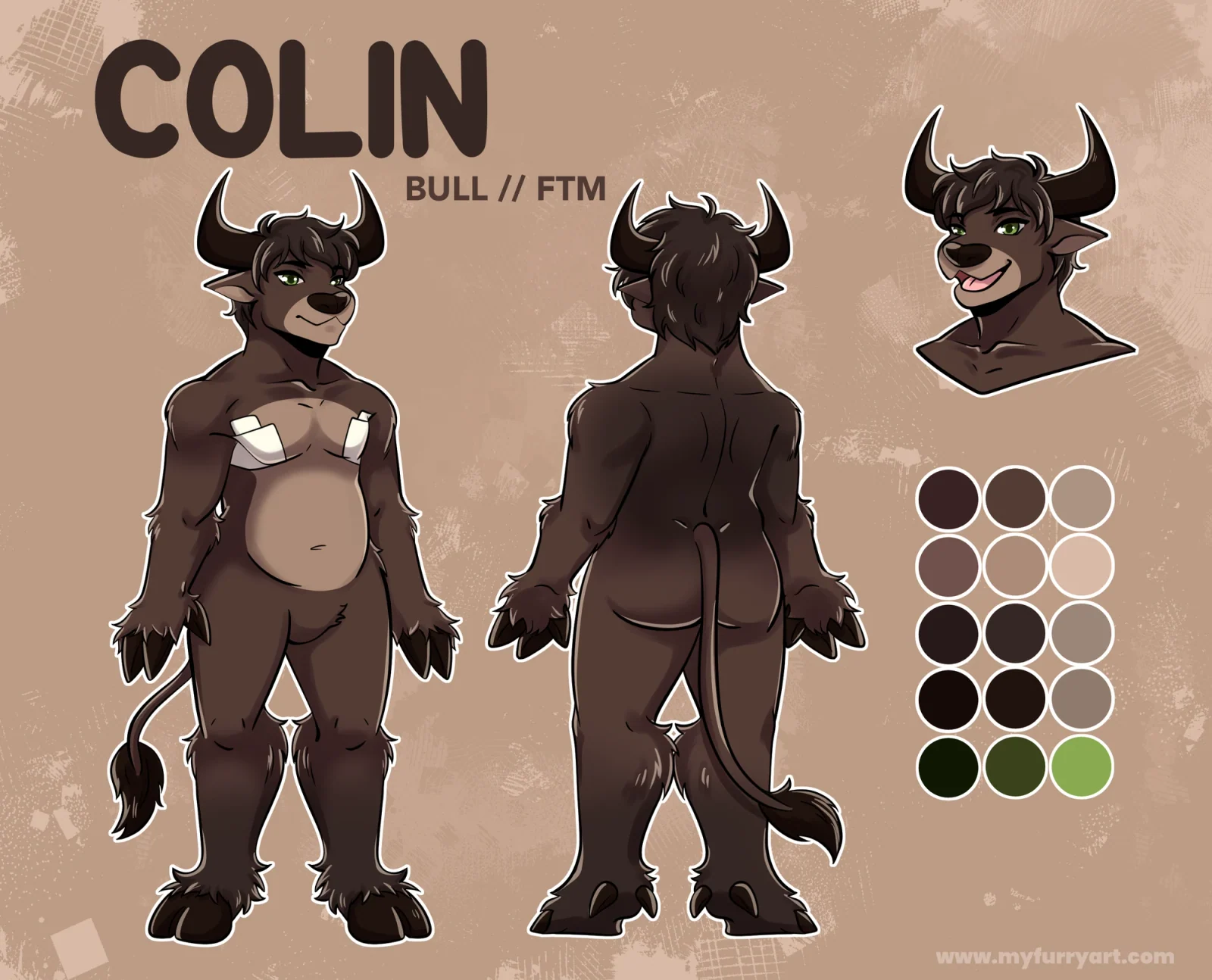
Horns, hooves and a tufted tail, seen from both sides, with a headshot for the face.
Three views or more
A side view shows the muzzle, the chest and anything that sticks out. This is the level of detail a fursuit maker usually asks for. In the side view the near arm is left off and marked with a crossed circle, so the markings on the body can be seen.
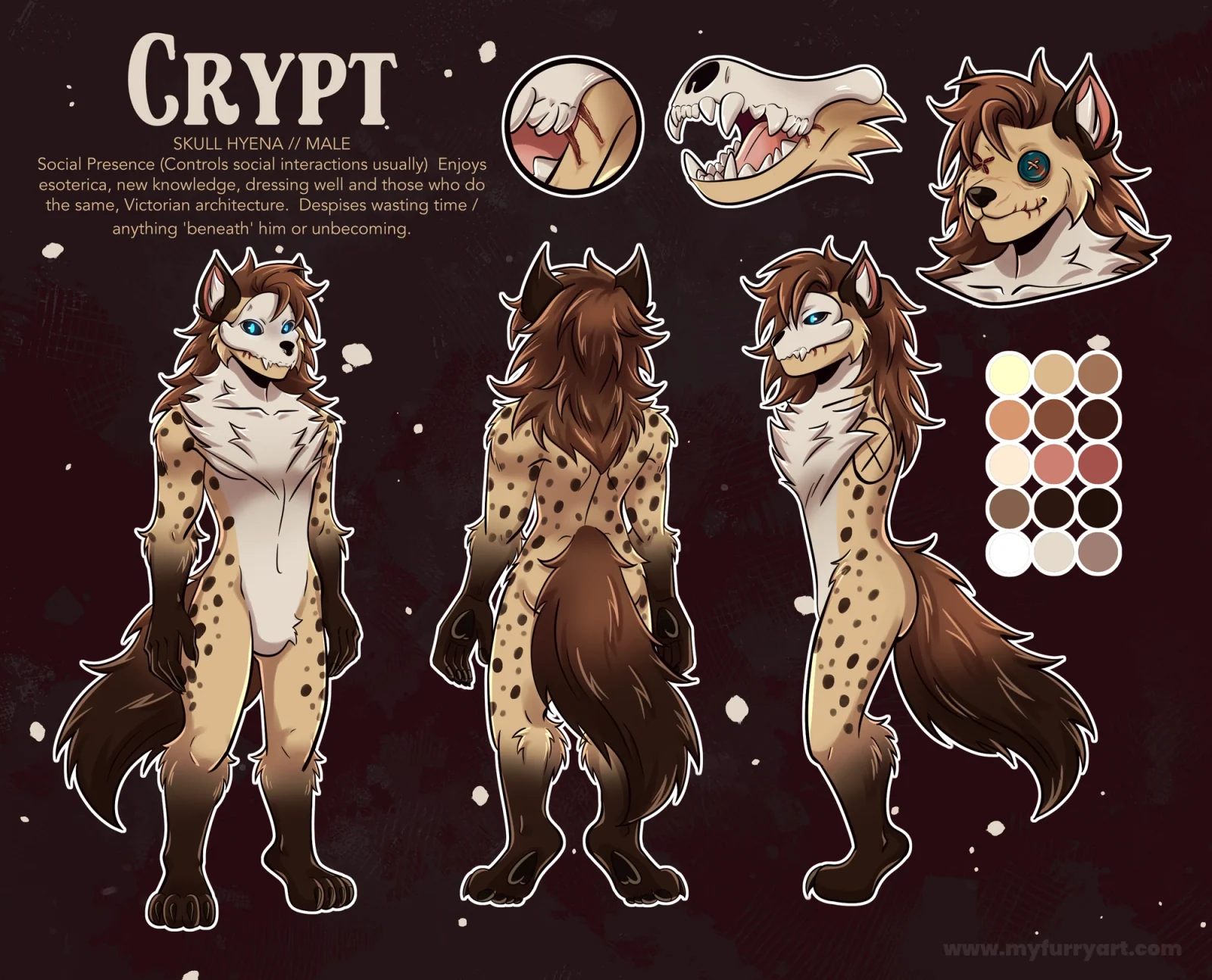
Front, back and side, a headshot, and a close-up of the skull: everything a fursuit maker would ask about.
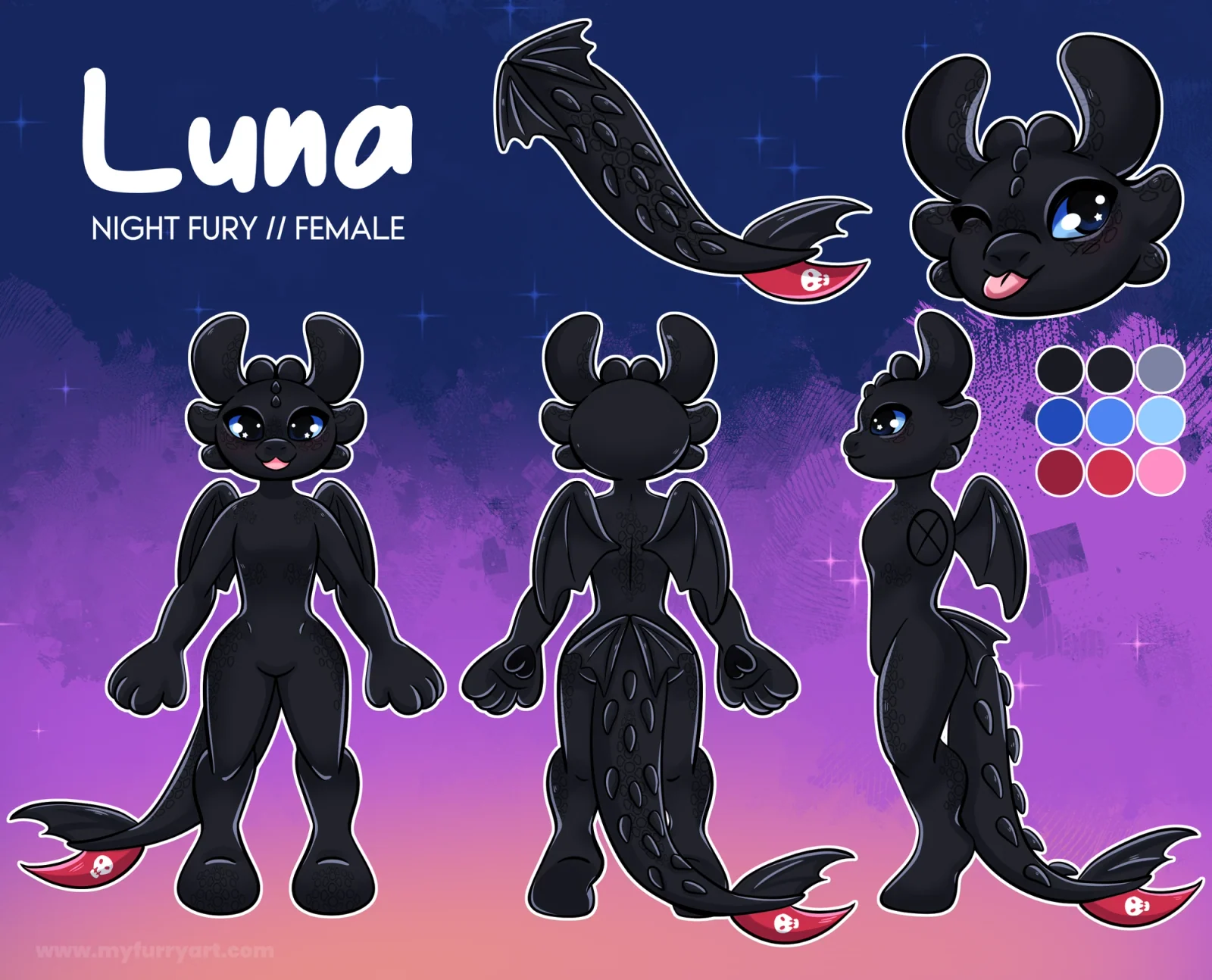
Three views, a headshot and a tail close-up. Wings and a finned tail look completely different from the side, so the third view earns its place.
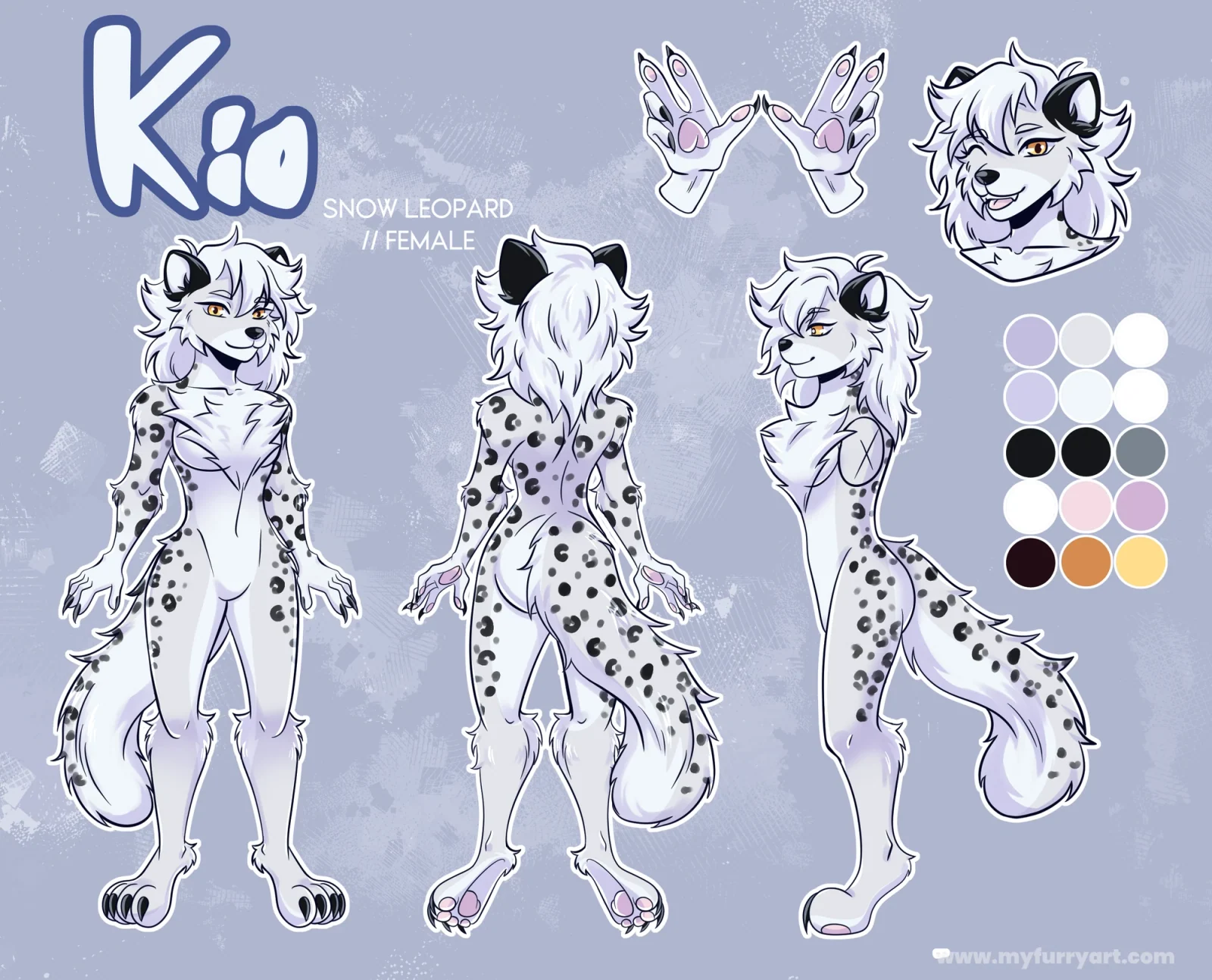
The spots are mapped on all three views, and the paw pads have their own close-up.
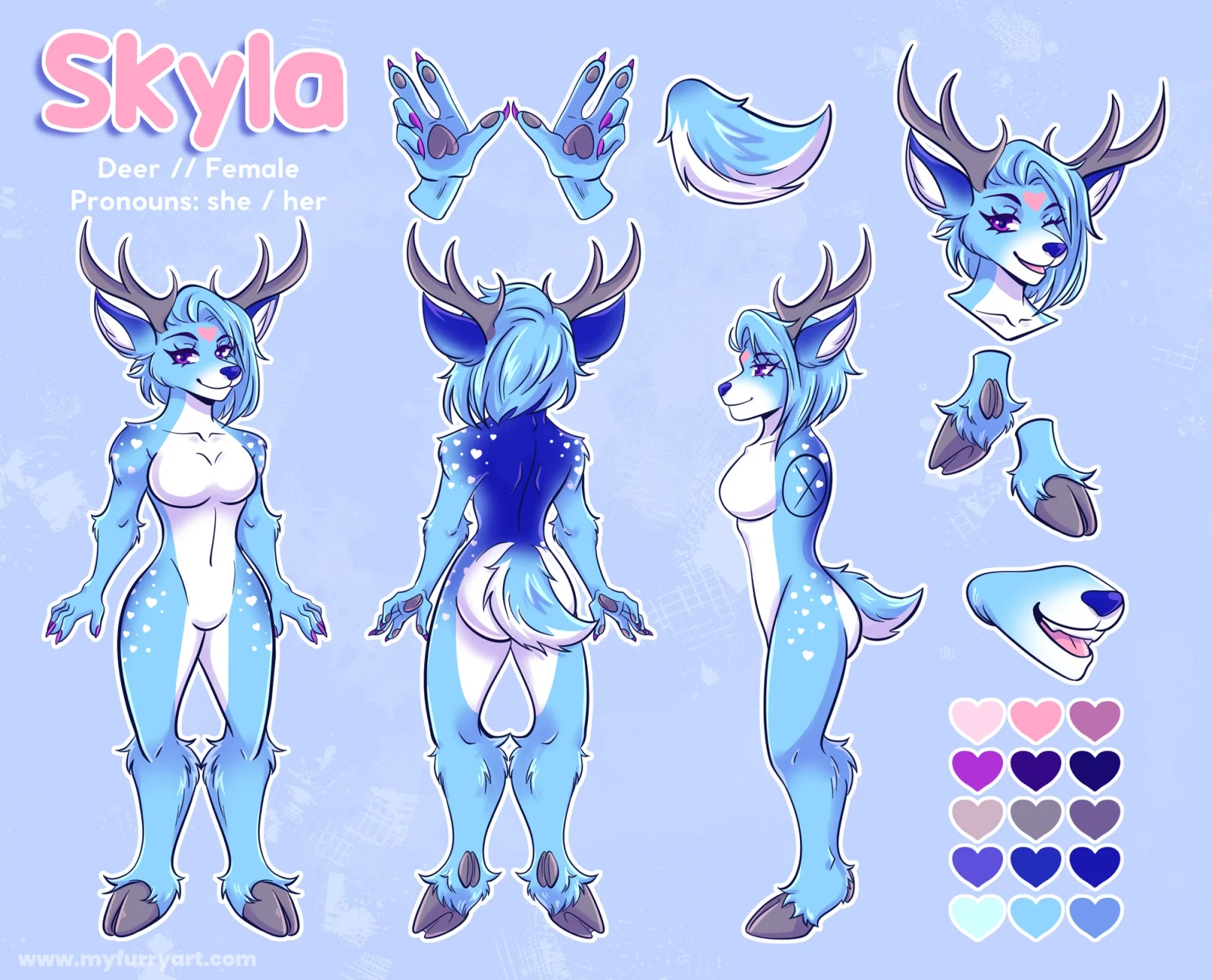
One of the fullest sheets here: three views, a headshot, an open mouth, hands, hooves and the tail.
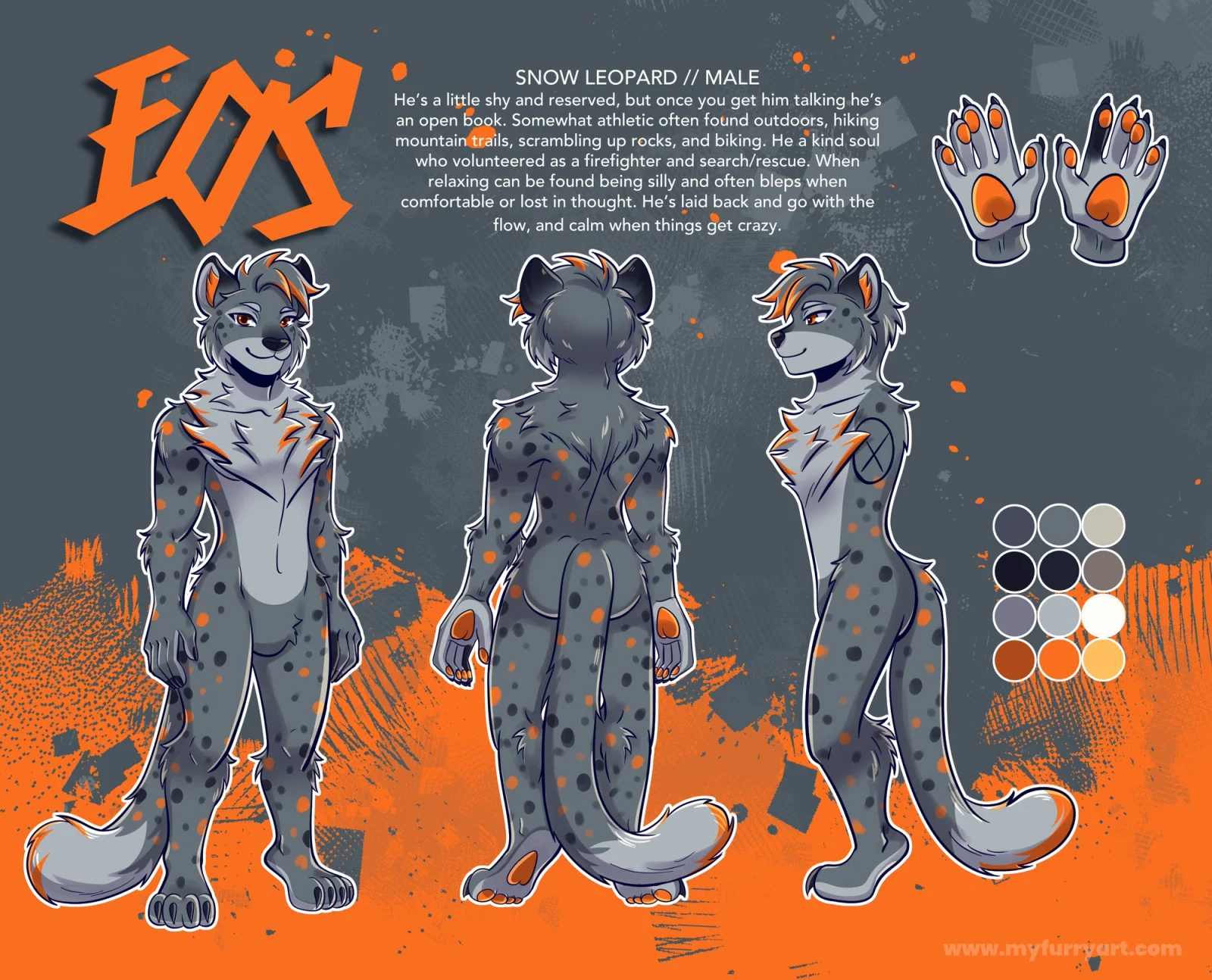
Orange markings on grey, shown from three sides, with the paw pads and a written description of the character.
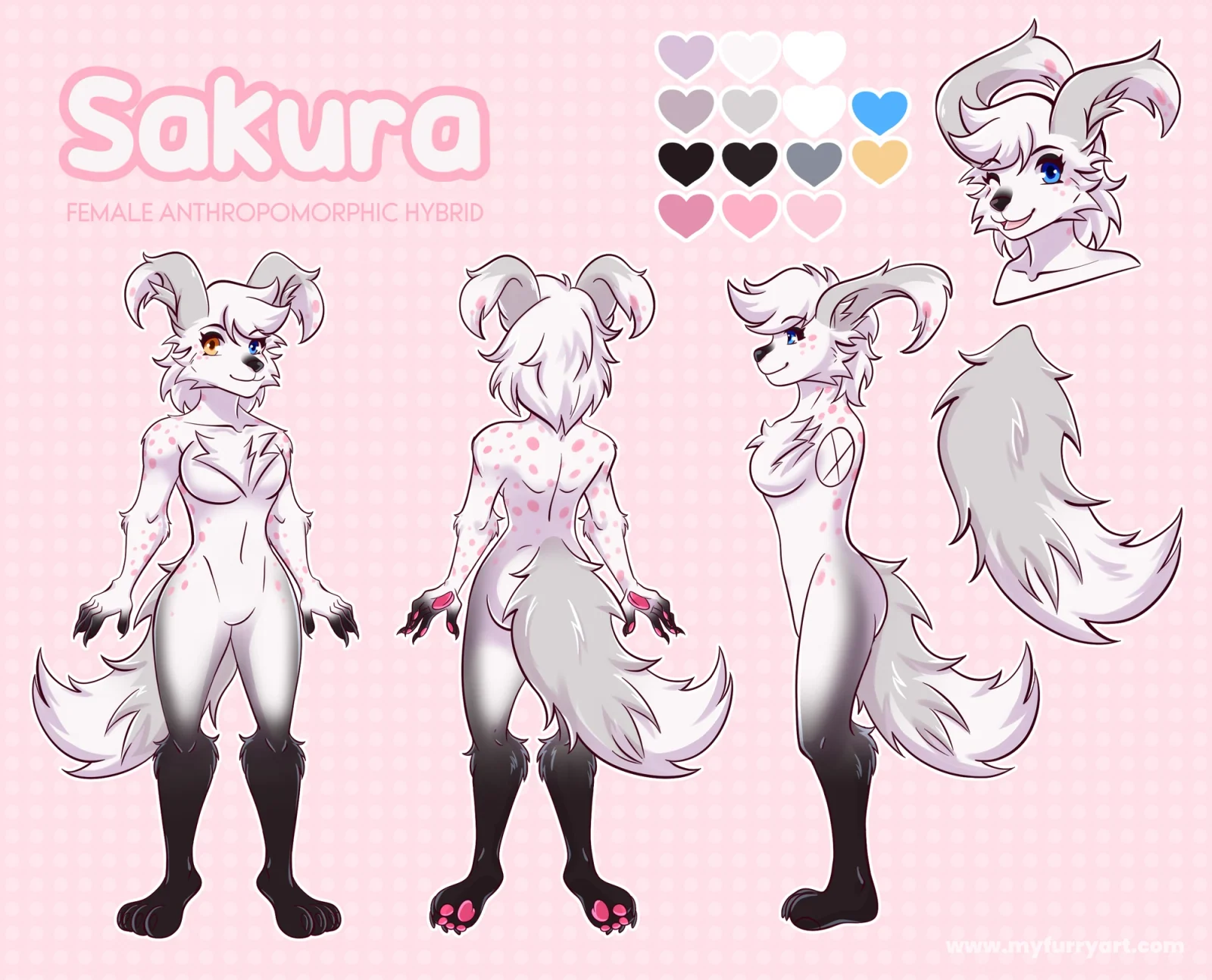
A hybrid with big curled horns. The side view shows how far they sweep back, which no front view can.
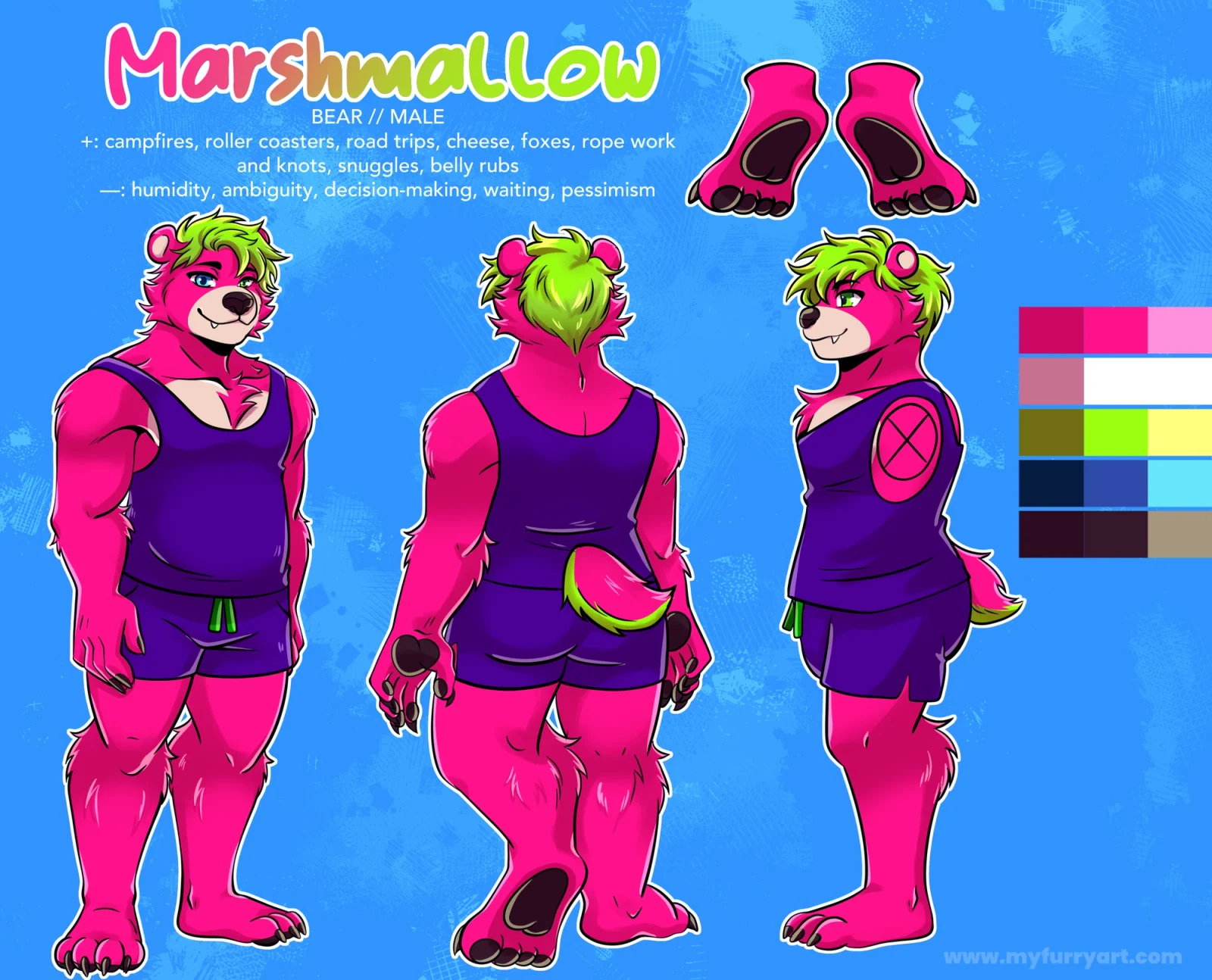
Bright colours, three views and the paw pads. The vest and shorts are part of the character, so they stay on in every view.
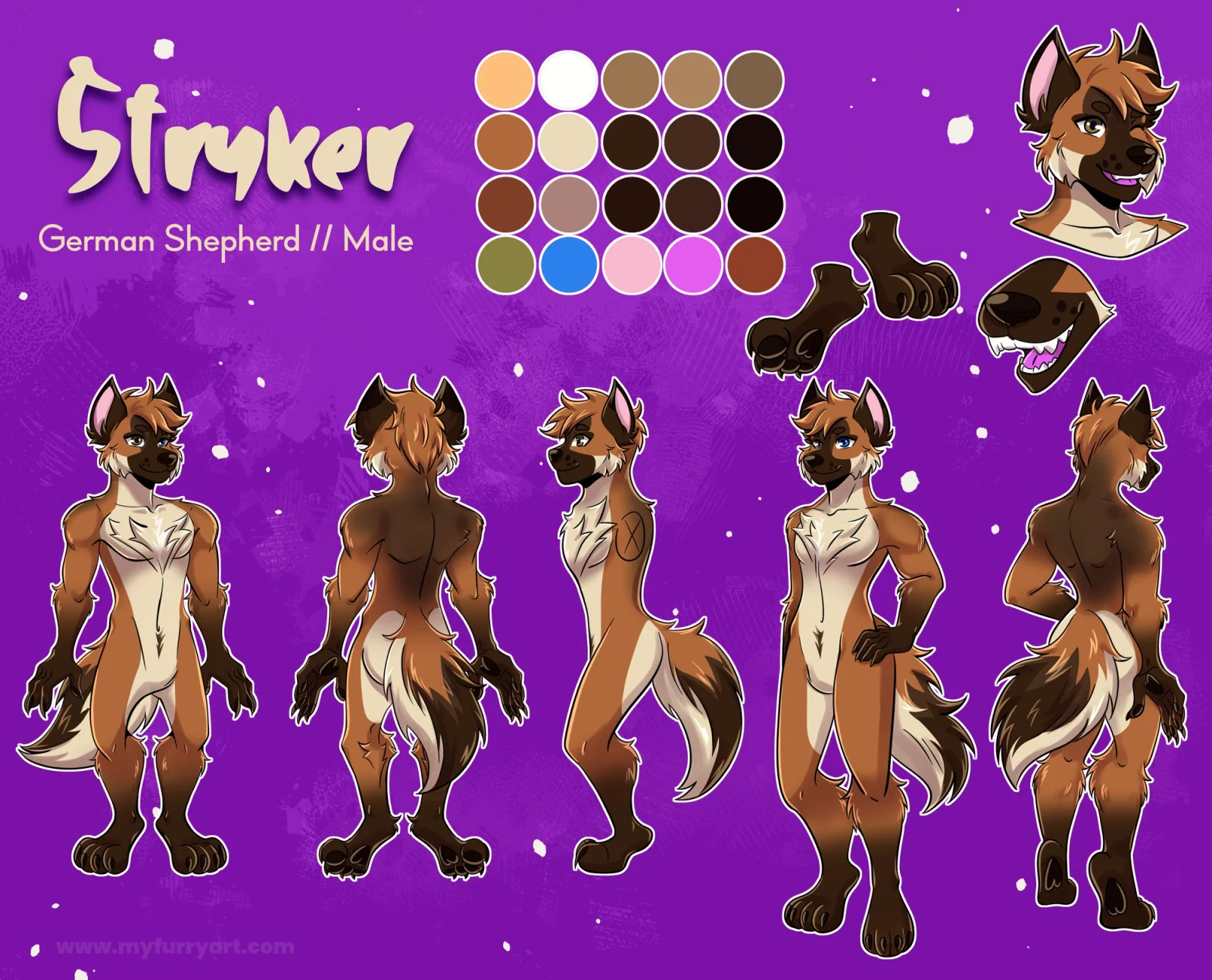
Five full-body poses, with a headshot, the feet and an open mouth. You can add poses one at a time: this is what a lot of them looks like.
With clothes and without
If your sona usually wears something, a sheet can show them both ways.
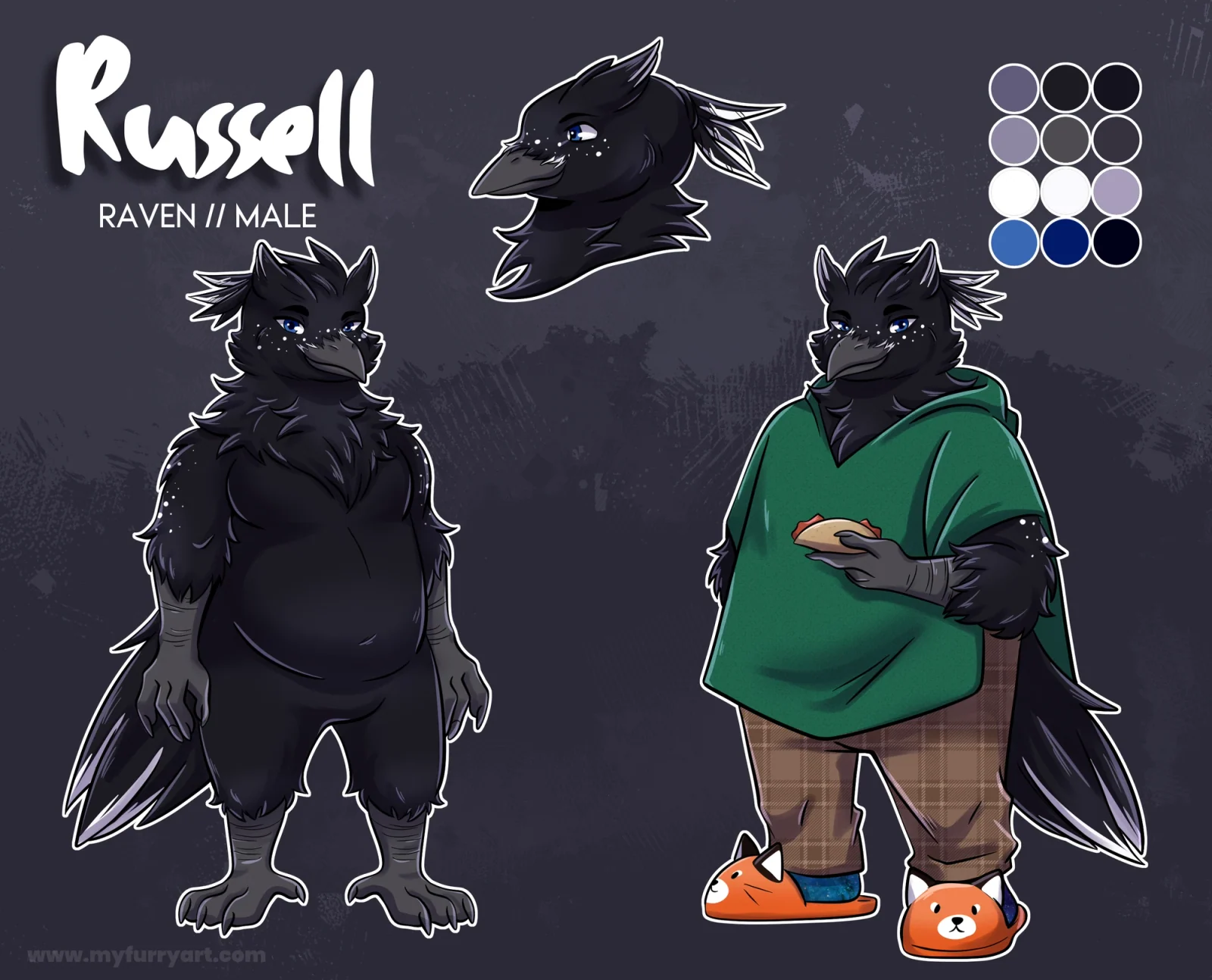
Once in his feathers and once in his poncho, plaid trousers and slippers, with a side-profile headshot for the beak.
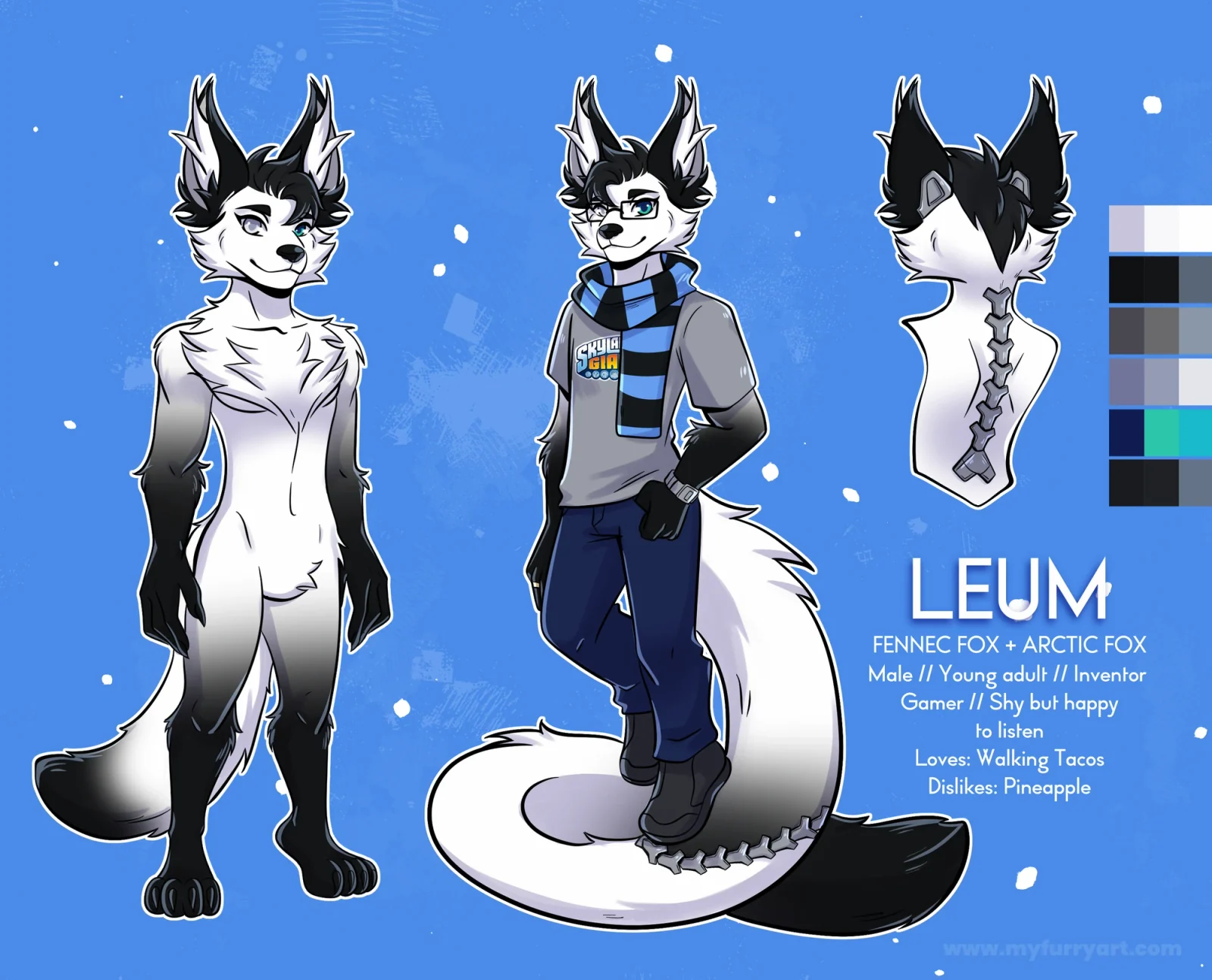
The same character with and without his outfit, plus a close-up of the back of the head and the detail that runs down his spine.
Scalies and avians
Every species has details that need showing. These are the ones that aren't fur.
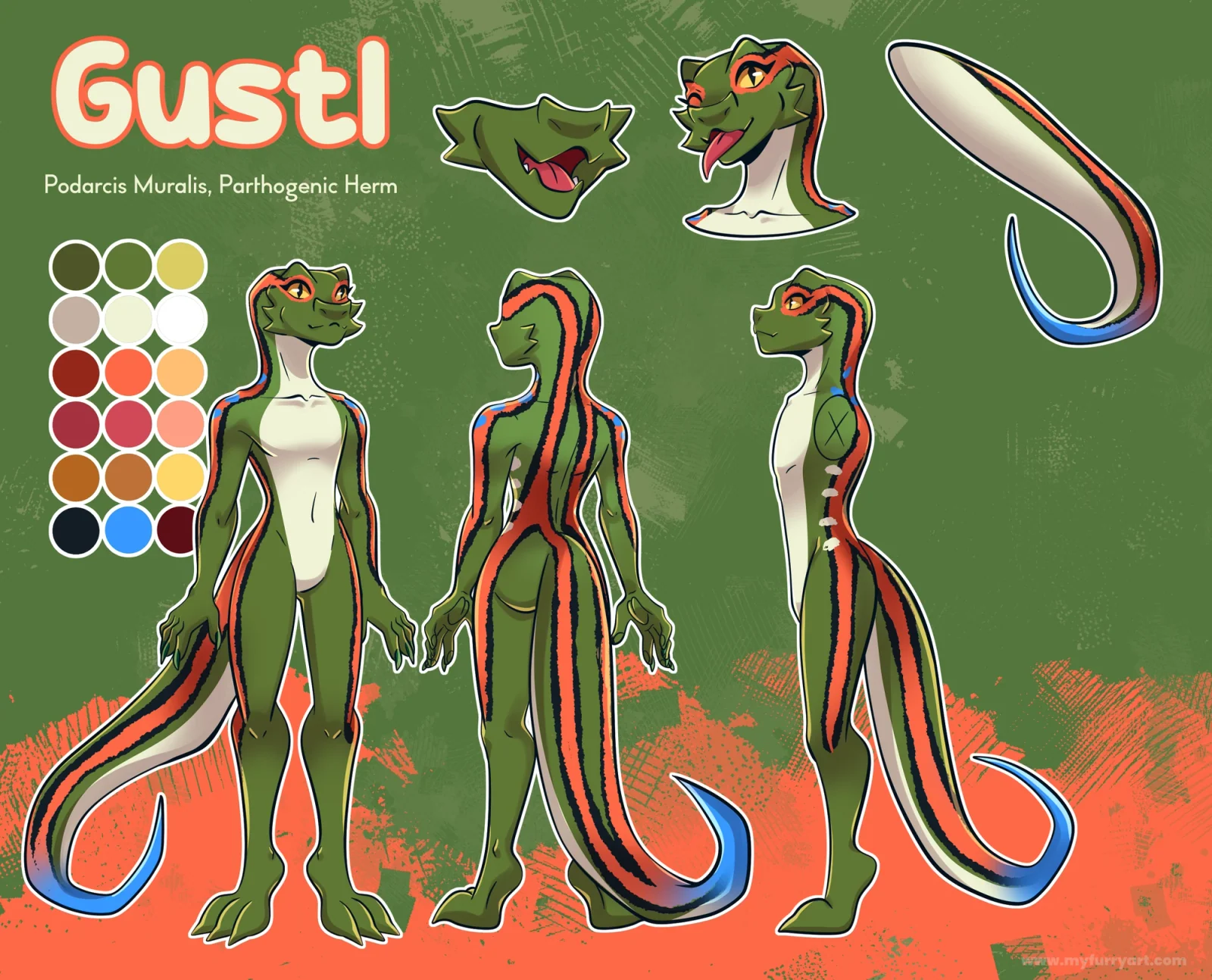
Stripes that run the whole length of the body and tail, from three sides, with an open-mouth view and a tail close-up.
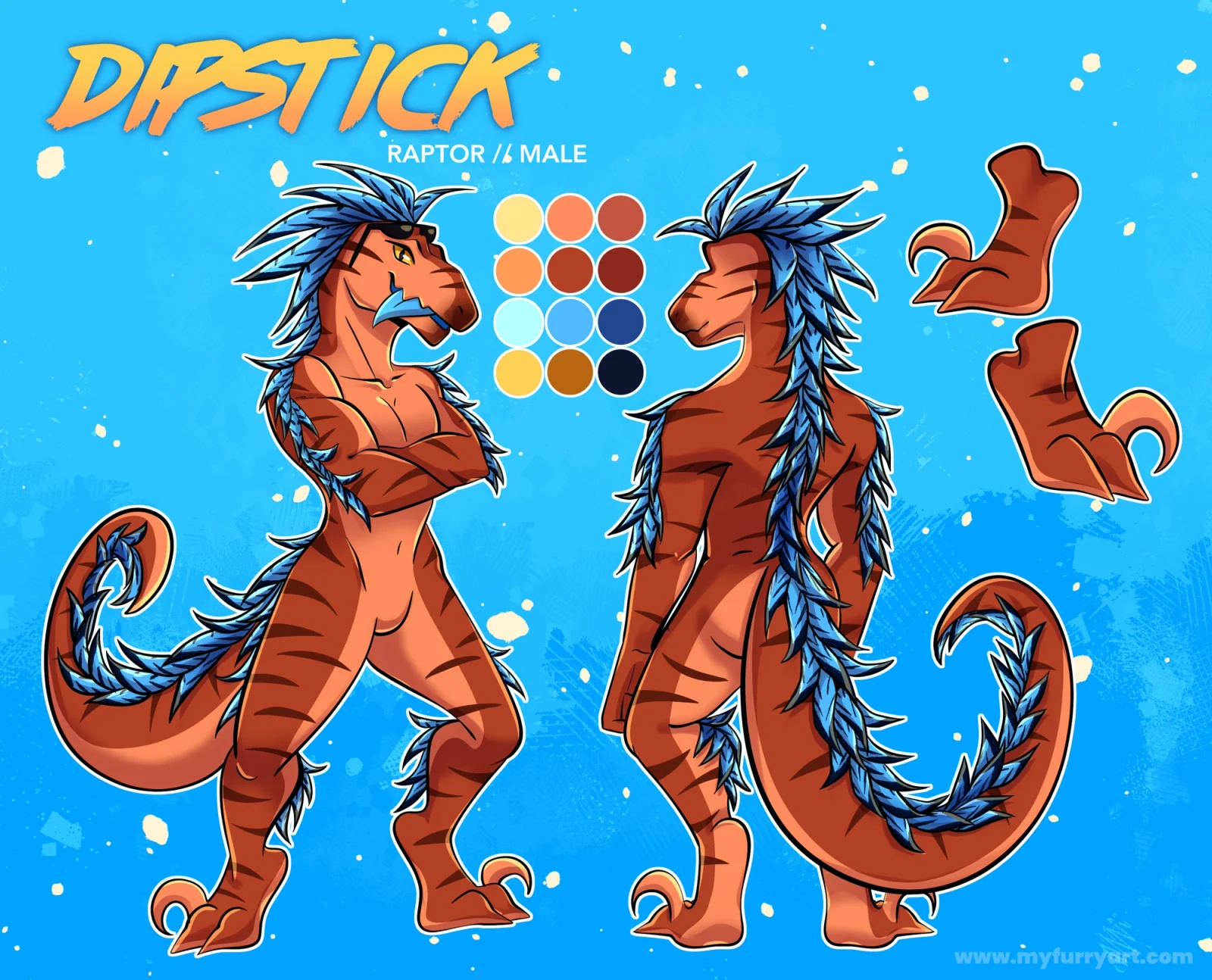
The feet get their own close-ups, because raptor claws are easy to get wrong. The back view shows the feather crest running all the way down the tail.
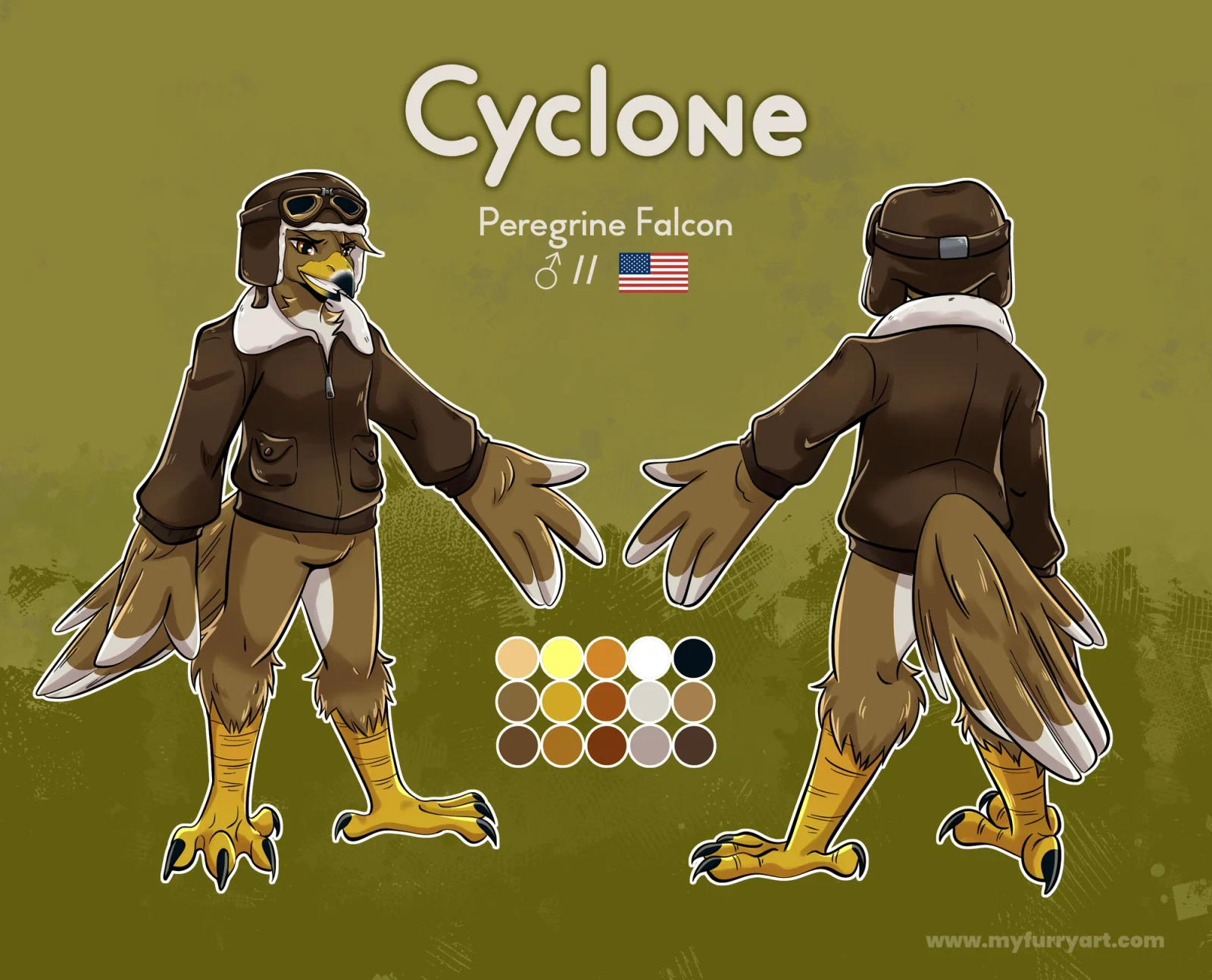
Wing-arms, talons and a beak, in an aviator's jacket, cap and goggles. The back view shows the tail feathers that a front view hides.
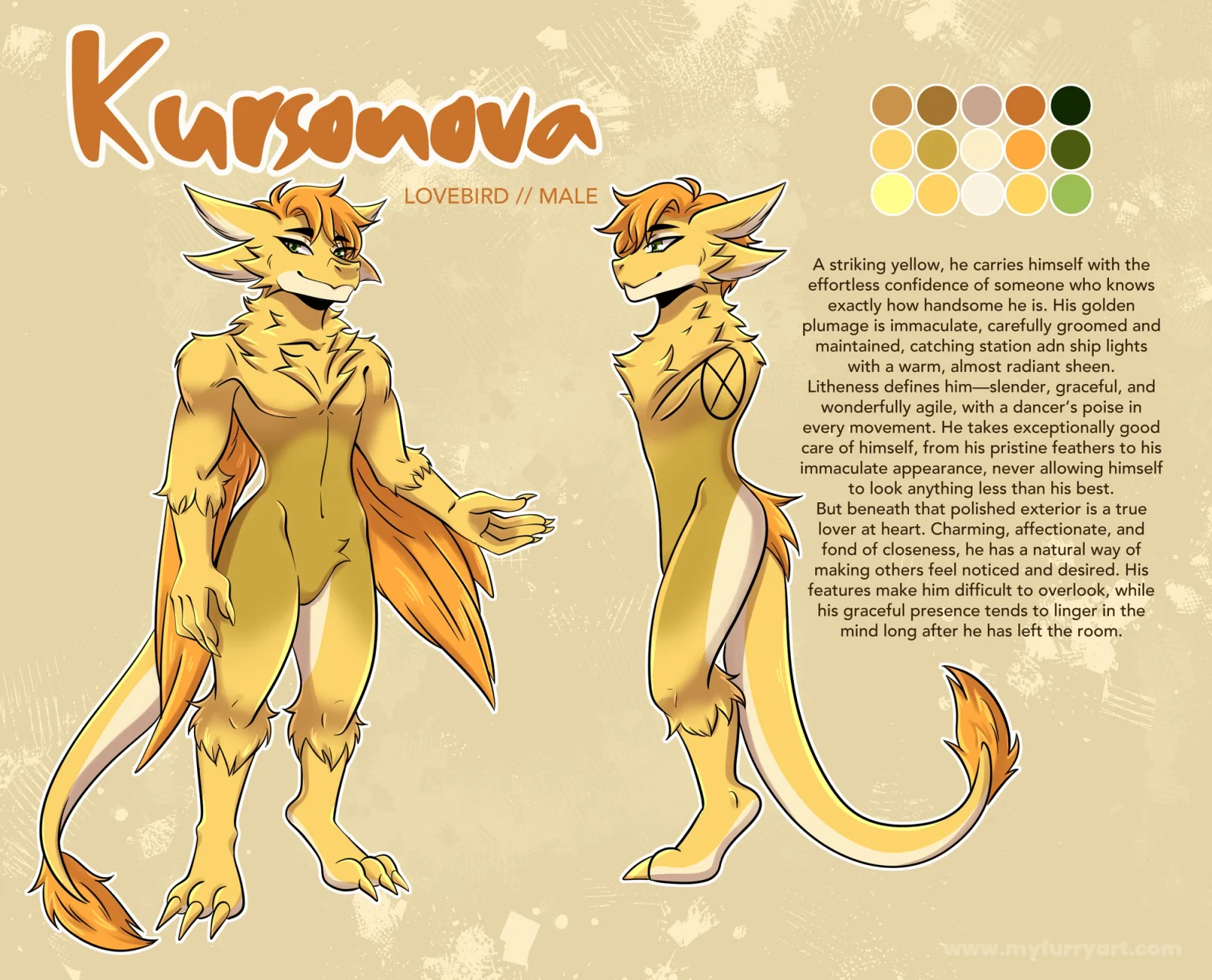
A front and a side view, with a written description beside them. The side view shows the long tail and its feathered tip.
What to take from these
- Start with two views. A front and a back are what every artist needs.
- Add an extra for anything small or hidden: the face, the paws, the tail, the inside of the mouth.
- Add a side view if your sona has horns, wings or a long muzzle, or if a fursuit is in your future.
- Let the palette do the work. Exact colours beat guessing from a shaded drawing.
- Write a few lines. Likes, dislikes and personality help the next artist get the mood right.
Our furry reference sheets start at $135 for two poses. You can pick every pose and extra yourself, and add more later.